

45 steel costs only about 30% as much as mold steels such as P20, making it a top choice when cost control is critical.
It is commonly used for mold bases and support structures that do not directly form the part.
After quenching and tempering to around HB 200, it can be milled directly. With a tensile strength of 600 MPa, it provides stable support for the mold base core, maintains overall rigidity, and significantly reduces the material budget.
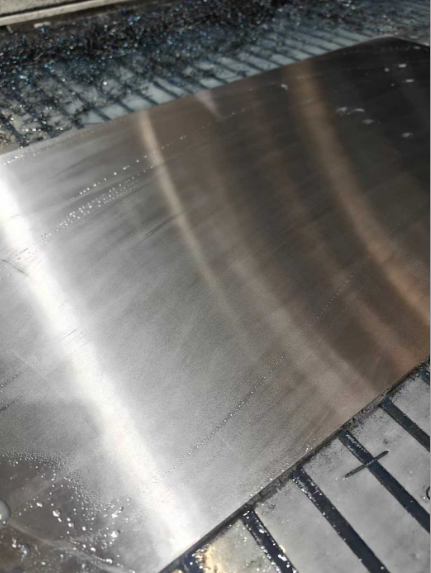
Mold Bases
Volume & Cost
An injection mold for an automotive bumper is about the size of a van, and once it is weighed, the total mass can easily exceed 15 tons. If the entire mold were made from imported 718H or domestic premium P20 steel at a unit price of just over RMB 50 per kilogram, the steel bill alone would come to RMB 750,000.
On today’s market, bulk 45 steel usually sells for around RMB 4,500 to RMB 5,200 per ton. The outer frame of the mold, known in the workshop as the mold base, accounts for more than 85% of the total volume. If that outer structure is switched entirely to 45 steel, the cost of the steel can be pushed down to under RMB 80,000.
That means a material saving of nearly RMB 670,000 in real cash. When the factory manager and sales team compete against a dozen rivals for an order, that cost advantage gives them room to quote a far more competitive price.
· The main plates in a mold base typically range from 50 mm to 250 mm in thickness.
· The portion that actually contacts the plastic and forms the part accounts for only about one-third of the total thickness.
· The remaining two-thirds is simply supported by 45 steel behind it.
A mold base built from dozens of heavy steel plates may look bulky, but its job is straightforward: it has to bear load. When the injection molding machine closes, it applies clamping forces of 1,000 tons or even 3,000 tons. With a yield strength of about 355 MPa, 45 steel can easily withstand that squeezing force as long as the plate thickness has been properly calculated on the drawing.
Take a CNC machining center with a 2-meter travel as an example. With a 32 mm face mill installed, cutting speed on 45 steel can be pushed to 220 m/min. With harder pre-hardened steel, the same machine would usually top out at only around 120 m/min.
· Before heat treatment, 45 steel typically measures around HB 170 to 210.
· When drilling ten 200 mm-deep cooling channels, it can save around 40% of the machining time compared with P20.
· Using the same internal-coolant U-drill, you can drill about 150 more holes in 45 steel before the tool is fully worn out.
When an 8 mm tap snaps inside a 300 mm-deep blind hole, the situation becomes expensive fast. An EDM machine has to be brought over, and the broken piece must be burned away bit by bit with a 20-amp current. Between five hours of repair work and the downtime on the machine, most of the profit on the mold can disappear.
That is why a material that is neither too hard nor too soft, and that cuts and drills cleanly, is valued not just because it shortens the delivery schedule by a day or two, but because it also helps prevent the kind of machining accidents that drive workshop supervisors mad.
The steel itself typically contains 0.42% to 0.50% carbon. After quenching at 840°C and then tempering, hardness can exceed HRC 45. A 15-ton mold base does not need that kind of treatment throughout. Only smaller high-wear components inside it, such as guide pillars and guide bushings that may rub tens of thousands of times a day, actually need to be hardened.
For large mold base plates weighing tens of tons, the steel mill cuts them to size before delivery, and the workshop usually sends them straight to the machine for rough milling with minimal preparation.
1. The sliding clearance between guide pillars and guide bushings must be held tightly within 0.01 mm to 0.03 mm.
2. The upper and lower surfaces of the large plates must be extremely flat, with waviness controlled within 0.02 mm per meter.
3. If the mold base is stored in the warehouse, it must be sprayed with WD-40 rust preventive every 90 days.
Experienced mold makers know exactly what 45 steel is like. It is tough and dependable, but it does not tolerate moisture well. In South China’s humid April rainy season, once workshop humidity rises above 60%, even a 48-hour weekend shutdown can leave a visible layer of orange rust on the mold base by Monday morning.
If that rust gets into the 0.02 mm precision clearances mentioned above, the machine will gouge the finished surfaces the moment it starts moving. That is why seasoned mold technicians are always willing to spend an extra five minutes before clocking out, wiping the mold base down with an oily cloth and leaving behind a 1 mm-thick protective oil film.
Money should be spent where it matters. Parts such as ejector plates or support blocks inside the mold base can even be made from ordinary Q235 plate at around RMB 3,000 per ton, as long as they are not subjected to high impact loads.
Machining
When a 15-ton automotive bumper mold first arrives in the workshop, it looks like nothing more than a few huge, solid steel blocks. Once the technician spreads the A0-size drawing on the bench, it becomes clear that the B plate alone may need more than 300 cavities, pockets, and holes machined into it. If the steel is too hard and too difficult to cut, the tooling bill alone is enough to make the finance department furious.
Mount a 63 mm face mill on a gantry milling machine and set the spindle steadily at 800 rpm. When cutting 45 steel, the feed rate can be pushed to 2,500 mm/min, and each pass can peel off a full 2 mm layer of metal. The chips come off as clean, blue, C-shaped curls, carrying most of the heat away with them.
Now switch to pre-hardened P20 at HRC 32. With the very same cutter, spindle speed has to drop to 500 rpm, and the feed rate cannot even reach 1,200 mm/min. If the spindle is forced to run at the more aggressive settings used for 45 steel, a box of inserts worth RMB 450 will chip out completely in less than ten minutes. The half hour lost to changing inserts would have been enough time to make two more passes on 45 steel.
| Workshop Process (for a 1000 × 800 mm plate) | Time with 45 Steel | Time with P20 Steel | Savings in Tools and Material |
| Surface grinding both sides flat | 2.5 hours | 4.0 hours | 35% less grinding wheel wear |
| Rough CNC milling, removing 30% of the stock | 18 hours | 32 hours | Nearly RMB 2,000 saved on inserts |
| Gundrilling 10 mm cooling channels | 6.5 hours | 11 hours | Drill breakage is much less likely |
A five-axis deep-hole drilling machine may drill dozens of 800 mm-long holes in a day, with a gundrill feeding into the steel under 50 kg of coolant pressure. With 45 steel, the chips flush cleanly back into the tank with the coolant flow, so the drill is far less likely to jam and snap.
Once the plastic part is molded, it has to be ejected by hundreds of slender ejector pins, which means the base plate must be densely drilled with small holes. Even a 4 mm twist drill can run steadily at 1,500 rpm in 45 steel and cleanly drill through a 50 mm-thick plate. With tougher alloy steels, the slightest wandering of a fine drill can cause it to snap inside the hole.
· A veteran fitter will first put on reading glasses and blow all surrounding chips clear with a high-pressure air gun.
· Then he will use a very hard carbide punch to carefully break up and remove the fragments deep inside the hole.
· If the broken piece is badly stuck, a portable EDM unit has to be brought over to spark it out.
After all the pocketing and drilling is done, the next test is the row of M30 lifting thread holes around the edge of the plate. The assembly technician uses one large tap as a starter and another for finishing. Threads cut in 45 steel come out full and strong, with an engagement area of more than 85%. Once the lifting eye bolts are threaded in, a mold weighing over ten tons can be hoisted safely without risk of dropping.
The upper and lower halves of the mold align entirely through the precise fit between guide pillars and guide bushings, so those mounting holes have to be bored extremely slowly on a coordinate boring machine. The drawing calls for a roundness tolerance of 0.005 mm, about one-tenth the thickness of a human hair. During fine boring, 45 steel rarely sticks to the tool, and the bore wall can be finished to a mirror-like Ra 0.8 with relative ease.
Now take a 120 mm-thick 45 steel main plate. Once the machine removes half of the material from the center, the internal stress balance is broken instantly. The moment the clamps are released, the two ends will spring upward by about 0.15 mm. In shop language, that is called deformation.
· The workshop solution is simple: lift the plate into an annealing furnace with an overhead crane.
· Heat it to 600°C and soak it for a full 8 hours to relieve stress.
· Then return it to the surface grinder and grind both faces flat again.
· When checked with a dial indicator, the height difference across a 1-meter diagonal must stay within 0.02 mm.
When machining 45 steel, shops usually mix an 8% milky emulsion cutting fluid and direct it straight at the tool tip. The coolant not only keeps cutting temperatures below 150°C, but also leaves behind a thin anti-rust film on the finished plate. Even in the rainy South, the steel can remain bright for three days without additional oiling.
For a large gantry mill with a 3-meter travel, just starting the machine costs at least RMB 150 per hour once depreciation and labor are included. Because 45 steel cuts so easily, an entire mold base can go from first setup to completion in about 80 machine hours. Switch to a harder, more difficult plate, and the total machining time can stretch to 140 hours, adding another RMB 9,000 in processing cost alone.
Compression Resistance & Rigidity
Walk into an injection molding shop and look up at a Haitian 1500-ton press, as tall as a two-story building. When the machine closes, its four 250 mm tie bars stretch several millimeters almost instantly. The mold base trapped in the middle has to bear the full 1,500-ton clamping load, roughly equivalent to stacking 1,000 family sedans on a few large steel plates.
A giant mold base is essentially a hollow shell more than 1.2 meters in both length and width. The central area has already been hollowed out to house the refined mold core that actually forms the plastic part. The outer structure relies on 45 steel to resist thousands of tons of compressive force. If the edge plates are even slightly too soft, the unsupported core inside can be crushed into scrap.
Test mold technicians say it all the time: “Once the machine starts cycling, every second is money. If the plates lose stiffness, everything becomes scrap.” If the mold base cannot withstand the clamping force, the molded parts will come out with sharp flash all around the edges.
PP plastic melted at 220°C is driven into the closed cavity by a 90 mm screw inside the barrel. The internal pressure can spike to 120 MPa in an instant, meaning every square centimeter of cavity wall is being pushed by roughly 1.2 tons of force. The molten plastic behaves like an explosive, constantly trying to force apart the two tightly closed mold halves.
The yield strength of 45 steel, at about 355 MPa, is fully adequate for this kind of service. Leaving aside the more complicated materials science, the simplest indicator of resistance to bending is elastic modulus. In laboratory testing, 45 steel comes in at roughly 210 GPa.
· Premium Swedish S136 usually measures within the same 200 to 215 GPa range.
· Imported Japanese NAK80 sells for around RMB 30,000 per ton, yet its resistance to bending is still physically very similar.
· As long as the applied stress remains below the material limit, expensive steels and ordinary steels will deflect by nearly the same amount under the same load.
Design engineers use a very practical rule of thumb here: the bending stiffness of a plate is proportional to the cube of its thickness. For a 100 mm-thick 45 steel plate, adding just 20 mm more thickness can increase its resistance to bending by more than 70%.
If the A plate and B plate in the mold base are increased from 120 mm to 150 mm, the extra cost of a few additional 45 steel plates may be only around RMB 1,000. Replacing the entire 1-meter-wide frame with premium alloy tool steel, by contrast, could add well over RMB 100,000.
If bending can be solved by adding a bit more low-cost steel, no one is going to spend that kind of money on premium material. Beneath the 1200 mm × 800 mm B plate sits a hollow box packed with hundreds of ejector pins. Every time the machine ejects dozens of molded parts, the unsupported center of the B plate takes the heaviest impact.
To keep that 2-ton B plate from sagging, the drawing will always include several cylindrical support pillars beneath it. Those plain-looking dark steel columns may seem simple, but machining them properly takes real skill.
1. The lathe operator cuts several solid 45 steel bars with a diameter of 60 mm and faces both ends flat.
2. The bars are laid out evenly at 150 mm intervals beneath the ejector plate in the available gaps.
3. The height of each support pillar must be ground to within ±0.01 mm.
4. The top of each pillar must contact the B plate perfectly, while the bottom sits firmly on the support plate below.
A few properly made support pillars can pull the maximum deflection at the center of the B plate back from 0.08 mm to under 0.02 mm. Once the sag exceeds 0.05 mm, highly flowable plastic melts such as ABS will be forced into the small gaps around the ejector holes.
The mold repair team hates dealing with mold spread failures. In one case, two 45 steel support pillars were omitted to save time. After 300,000 high-pressure cycles, the thick B plate had permanently sunk in the middle like the bottom of an iron wok, and hundreds of ejector pins were jammed so tightly they could no longer be removed.
A qualified automotive bumper mold may run continuously on the press for more than four months and absorb over 500,000 high-pressure opening and closing cycles. The ferrite-pearlite structure inside 45 steel is tough and durable, provided the designer has calculated the loads correctly and kept them within safe limits.
As long as the surface pressure on the large plates stays below 210 MPa, the working stress remains within about 60% of the yield strength. That means a 15-ton mold base can run day and night for years, and even after the mold core inside is fully worn out, the outer 45 steel frame still will not suffer fatigue fracture.
Support Parts
Common Types
Inside the mold used on an 800-ton injection molding machine, there is typically around 1.5 to 2 tons of steel. If you check the cut sections with calipers, the dimensional error is usually held to around 0.02 mm.
The moment the press closes, the force is roughly equivalent to stacking 300 passenger cars on top of each other. The first components to take that load are the long 45 steel spacer blocks on both sides, which work like load-bearing walls. The two blocks sit in parallel, leaving a rectangular gap of 150 mm to 350 mm between them. At four cycles per minute, each block has to withstand repeated compressive loads of about 35 MPa all day long.
Inside that open space sit two stacked moving plates, known in the shop as the ejector plate and the retainer plate. Workers use a radial drill to machine 60 to 120 small holes in them, with diameters ranging from 3 mm to 8 mm. Thousands of daily ejection cycles depend on those plates and linkages working together. If a hole is off by even 0.05 degrees, the slender ejector pins can jam or snap instantly.
Experienced shop hands like using 45 steel for load-bearing plates. With the feed set to 0.25 mm per minute and spindle speed at 1,200 rpm, a face mill can sweep across the surface and leave behind a Ra 1.6 finish with ease. If the same operation is performed on harder P20, tool life can drop by more than one-third.
Old factory managers already have the numbers worked out when buying material:
· Raw steel costs RMB 6 to 8 per kilogram
· External heat treatment costs only RMB 1.5 per kilogram
· Grinding wheel wear drops by 25%
· Continuous run time on large milling machines improves by nearly 40%
· Scrap recovery can reach 90% when sold back for remelting
When a steel frame spans more than 400 mm, the unsupported center can begin to sag under prolonged loading. Even a downward deflection of just 0.1 mm can create 0.15 mm of flash on the molded plastic parts. To prevent that, assembly technicians insert 3 to 5 solid load-bearing cylinders between the bottom plate and the moving plate, much like shimming the leg of a table.
These cylinders are usually 40 mm to 80 mm in diameter and are fastened at both ends with M12 socket head screws. To match the heights of the surrounding support blocks, machinists cut them from solid 45 steel round bar. Both ends are faced on a lathe, and parallelism must be controlled within 0.01 mm. If there is a 0.02 mm taper from one end to the other, the column will tilt under load.
In its as-received condition, the material is relatively soft. Even a 2-pound hammer can dent the surface. After two hours at 840°C in a vacuum furnace, followed by quenching and tempering, hardness can be stabilized at HRC 28 to 32. That preserves a tensile strength of 600 MPa without making the part brittle like high-carbon steel.
On the assembly bench, technicians follow a fixed set of rules when installing these columns:
· Leave a preload clearance of 0.05 mm to 0.08 mm under the column
· Apply high-temperature grease evenly to all mating surfaces
· Keep at least 15 mm away from internal cooling channels to prevent leakage
· Leave 20 mm of clearance from ejector pin holes to avoid interference
The injection molding machine does not only apply downward pressure. When the mold opens, there is also lateral pulling force of tens of tons. Guide bushings therefore have to be fixed tightly into the base. During drilling, the interference allowance is usually set at 0.015 mm to 0.025 mm. At this stage, 45 steel still retains its 210 GPa elasticity, and once it is driven in with a copper hammer, the fit is rock solid.
The large bottom plate at the base of the mold is usually machined to a thickness of 40 mm to 60 mm. If it is made too thin, the center will expand about 0.08 mm more than the edges under molding temperatures of around 120°C. That slight bowl-shaped thermal distortion can throw hundreds of kilograms of components out of alignment.
The top plate also contains four additional sliding columns. The two moving ejector plates slide up and down between the spacer blocks more than 3,000 times a day. To prevent dry rubbing and seizure, the inner wall of the guide sleeve is machined on a CNC lathe with a spiral oil groove 3 mm wide and 1.5 mm deep. Once packed with grease, it can keep the mechanism moving smoothly for a full 100,000 cycles.
During the monthly equipment inspection, the maintenance crew focuses on several key checkpoints:
· Whether scratches deeper than 0.1 mm have formed beneath the ejector plate
· Whether the tops of the support columns have sunk more than 0.02 mm
· Whether rust-preventive paint loss near water lines exceeds 5 cm²
· Whether any fixing screws above M10 have loosened
· Whether a 0.03 mm feeler can be inserted between the steel plates
After the black grime on the surface is wiped away with cotton soaked in kerosene, a fresh 0.05 mm film of rust preventive is sprayed on. Then a 5-ton overhead crane lifts half of the thousand-kilogram steel frame back onto the press, and the four locating columns slide into place with a metallic clang. At 8 a.m. the next morning, production starts again, and the molten plastic is once more injected into the mold under high pressure at 220°C.

Advantages of 45 Steel
When the purchasing manager drives a forklift into the outdoor stockyard, he is usually bringing in a full truckload of 20 tons of wide heavy plate. A tape measure shows standard sizes of roughly 2000 mm × 1200 mm, and the surface still carries the dark reddish mill scale from the steelworks. A large caliper on the edge of an 85 mm plate will show a thickness variation of no more than 0.5 mm from top to bottom.
A fitter raises a long-handled oxy-fuel cutting torch and sets the oxygen gauge to 0.5 MPa and the acetylene valve to 0.05 MPa. After just a few seconds of heating, the steel edge turns white hot and melts. The cutting nozzle moves forward at about 400 mm/min, sparks flying downward, leaving behind a straight kerf only 3 mm wide, with the heat-affected edge staying within 1.5 mm.
Once the block is lifted onto a large milling machine and the surface cut begins, the material feels almost as easy to machine as slicing through a crisp radish with a sharp knife. A 160 mm cutter head fitted with six carbide inserts runs at 800 rpm. With each pass, it can remove a 5 mm layer of steel, and the load meter on the machine never even reaches the 40% red line.
Put a pre-hardened P20 alloy plate on the same machine, and the difference is obvious. Even turning the machine handwheel feels harsh. The chips on the floor look completely different too. With 45 steel, they fall as long blue curls. With P20, they break into sharp, brittle fragments. The cleaner may haul away more than 300 kilograms of scattered metal chips a day.
The workshop whiteboard often carries a comparison chart like this for apprentices:
| Evaluation Item | 45 Steel | P20 Alloy Steel |
| Maximum milling feed rate | 600 mm/min | 250 mm/min |
| Drill depth in one pass | 40 mm | 15 mm |
| Service life of one insert | 450 min | 180 min |
| Achievable surface roughness (Ra) | 1.6 - 3.2 | 0.8 - 1.6 |
| Power consumed to remove 1 kg of steel | 0.4 kWh | 1.1 kWh |
When all the numbers are added up, machining a medium-size 2-ton mold base in 45 steel can save a full 48 hours on the machine tools alone. With two-shift operation, a base that once needed 168 hours can now be delivered to assembly by Thursday afternoon, with bright finished plates ready for bolting together.
The rough plates are then sent to the furnace area on carts. A heat-treatment technician uses a long steel hook to drag a 150 kg block into a large electric furnace. The meter spins wildly as the temperature climbs steadily to 840°C over three and a half hours. The red-hot block soaks for 120 minutes, allowing the internal grain structure to rearrange.
Then the heavy furnace cover opens slowly, and the crane lowers the glowing steel into a 10-ton quench tank of cool water. Steam erupts instantly, and the surface temperature drops below 300°C within 15 seconds. The rapid cooling traps the carbon atoms in place before they can diffuse away.
Next, the block goes into a second furnace at 550°C for four hours of tempering. After cooling, a hardness tester hits the surface and the dial settles steadily at HRC 28. The internal stress created during quenching has now been relieved, and the edges will no longer chip out even when struck hard with a hammer.
Pulled on a tensile tester in the lab, the material can reach over 600 MPa. A simple 50 mm-diameter load-bearing round bar can support a vertical load of 120 tons without deforming. Installed inside an 800-ton injection molding machine, the internal supports remain stable even when the four main tie bars around the machine are groaning under load.
When repairing molds, nothing is more troublesome than cracks in heavy plates. Fortunately, 45 steel is easy to weld and repair. A worker uses an angle grinder to open a V-groove along the crack to a depth of about 8 to 10 mm, then sets the welder to 130 amps and fills it with inexpensive J422 electrodes. Once the metal fuses, the repair is sound and solid.
With high-carbon or alloyed hard steels, the part often has to be preheated slowly to around 200°C before welding. If the post-weld cooling is not controlled properly with insulation, a new crack 0.5 mm wide can appear beside the seam within half an hour. With ordinary 45 steel, all of that extra trouble can usually be avoided. It can simply cool in the open on a concrete floor and still hold up well.
In summer, the injection shop can reach 40°C, while 120°C hot oil circulates inside the mold. For a large bottom plate 800 mm long, thermal expansion is roughly 11.5 microns per meter per degree Celsius. The total length increase is nearly 0.7 mm, but because the heating is uniform, the plate stays flat instead of warping.
Lathe operators machine 25 mm holes in the bottom plate to give the large ejector pins room to retract. The hole wall may be less than 15 mm from the plate edge, right at the safety limit. Even under 5,000 violent cycles a day, that thin steel wall can withstand the side loading for a full year without showing even the smallest crack.
Transparent and Affordable Pricing
Today, the listed market price for hot-rolled wide heavy 45 steel plate in Wuxi stands at RMB 5,230 per ton. That works out to just RMB 5.2 per kilogram, cheaper than a couple of pounds of vegetables at the market. Even if iron ore futures spike, the next morning’s price usually moves by no more than RMB 0.05 per kilogram.
Now compare that with P20 alloy steel. The quotation sheet clearly shows RMB 18.5 per kilogram. If the customer specifically asks for Fushun steel with a material certificate, the price increases by another RMB 3 per kilogram. For a 65-inch TV back-cover mold, the surrounding support blocks and large bottom plate alone can weigh 1.2 tons.
“Buying 1.2 tons of heavy black 45 steel costs a little over RMB 6,000. If we switch the whole thing to P20, it jumps to more than RMB 22,000. The money saved is enough to cover a month of full-attendance wages for three assembly workers.” Old Wang in the shop likes to do that calculation by tapping on the table.
Its low price is not the result of corner-cutting. It is simply because more than a hundred blast furnaces across the country are producing it, and there is no economic incentive to adulterate it. A laboratory technician can place a 1.5 kg analyzer on the cut surface, and within three seconds the screen displays the full chemistry report.
Carbon stays steadily within 0.42% to 0.50%, while manganese remains within 0.50% to 0.80%. Harmful sulfur and phosphorus are both strictly controlled below 0.035%. It is a material with transparent, predictable economics from start to finish:
· A 30-ton truckload of plate can be weighed on a 100-ton scale with an error of no more than 0.3%
· The warehouse usually keeps 15 standard sizes in stock, from 50 mm to 120 mm thick
· Call the steel market at 3 p.m. for two 80 mm plates, and they can often be delivered before 5 p.m.
· Even large plates shipped in from Tangshan, Hebei, cost only about RMB 120 per ton in trucking
· A 13% VAT special invoice can be issued and processed with the tax bureau by the 15th of each month
At year-end, the finance desk is piled high with weighbridge receipts, each one accounted for down to the cent. Even when outside auditors randomly pull a steel purchase dated May 18 and compare it with the Shanghai market price for that day, the difference is rarely more than RMB 0.10 per kilogram.
Some imported specialty steels with foreign labels can turn into a three-month argument if a cut edge reveals inclusions or uneven hardness. If a 45 steel plate shows slag on the edge after cutting, the supplier will often take it back and replace it the very same afternoon.
A bottom plate weighing 800 kg may shed about 150 kg of chips after being face milled with a 160 mm cutter head and drilled with 80 holes.
Those dry chips are stuffed into old woven sacks and stacked at the back door. The scrap collector arrives every Wednesday without fail. At today’s purchase price of RMB 2,450 per ton, those 150 kg of scrap bring in around RMB 360 in cash on the spot.
The accounting clerk records that RMB 360 directly against a full day of electricity for a 22 kW machine tool. From the moment a 1-ton steel block is purchased until it eventually turns into chips, every 0.1 gram is accounted for. In the workshop, even offcuts thinner than 2 mm can still be sold at a decent price.
Cost Control
Material Price Gap
In South China’s steel markets, ordinary 45 steel stock usually sells for about RMB 5.5 to RMB 6.5 per kilogram. The most common pre-hardened plastic mold steel, P20, starts at around RMB 13 per kilogram. If 718H is used for appearance parts, the price jumps straight to about RMB 26 per kilogram. For S136 stainless mold steel specified for mirror polishing, the price reaches RMB 65 to RMB 80 per kilogram.
Take a standard 6050 mold base as an example. It measures 600 mm long, 500 mm wide, and about 450 mm thick with its support plates and blocks included. At a steel density of 7.85 g/cm³, the full assembly weighs 1,060 kg. If the whole set is made from P20, the steel bill alone comes to RMB 13,780.
If the rear half that never touches the plastic is switched to 45 steel, the material cost drops immediately to RMB 6,360. That is a saving of RMB 7,420 on a single mold. At 40 new molds per month, annual steel procurement can be reduced by more than RMB 2 million. And those purchased plates still have to be machined afterward.
When one ton of raw stock is milled to size, around 200 kg of chips are generated. Scrap dealers pay around RMB 2.1 per kilogram regardless of whether the chips came from 45 steel or a much more expensive alloy steel. The more expensive the original steel, the more painful that loss becomes.
A quick breakdown of mold base weight distribution looks like this:
· A plate and B plate holding the mold core: 45%
· Spacer blocks used only for height: 20%
· Ejector plate and bottom plate: 15%
· Upper and lower mounting plates fixed to the machine: 20%
The spacer blocks and ejector plates together account for more than half the total weight, yet on a 250-ton to 400-ton injection machine, their main job is simply to resist compressive load. Even in the untreated condition, 45 steel has a yield strength of 355 MPa. For this kind of duty, that is more than enough.
When buying premium mold steel, suppliers often dislike cutting it into small pieces because the leftovers are harder to resell. One cut may require a minimum order of 50 kg. But 45 steel is available everywhere. If you need a single 30 mm-thick block weighing only 8 kg, a local steel merchant can cut it for you in a matter of minutes.
Specialty steels sometimes have to be shipped in from another province, which means waiting three to five days and paying around RMB 0.6 per kilogram for cross-province freight. By contrast, 45 steel is readily available on demand within a radius of ten kilometers. Spend RMB 50 on a small truck, and half an hour later the steel plate is lying on your workshop floor.
Of course, inexpensive materials have their own limitations. With a carbon content of 0.42% to 0.50% and no added anti-rust alloying elements, 45 steel can rust easily during humid weather in Guangdong. But basic maintenance is cheap and effective:
· Black oxide treatment: RMB 0.8 per kilogram
· WD-40 rust preventive: RMB 25 per can, enough for about 3 m²
· Anti-rust film: RMB 120 for a full roll
· Rust remover paste: RMB 15 per tube for light surface rust
Efficiency & Wear
Once the steel arrives in the shop and a 500 kg plate is lifted onto a CNC machine, the spindle begins turning and both electricity and tooling costs start adding up. In the as-supplied, non-quenched condition, 45 steel typically measures HB 170 to 210. If you switch to pre-hardened 718H, hardness rises to around HRC 30 to 35.
That difference of more than ten hardness points completely changes the machining parameters a technician can enter on the control panel. Take rough milling with a 63 mm face mill. On 45 steel, the spindle can confidently be set to 1,200 rpm, with feed pushed all the way to 2,500 mm/min. On harder 718H, spindle speed has to be reduced to around 800 rpm.
Even then, feed rate can barely reach 1,200 mm/min. To machine a 600 × 500 mm bottom plate flat on both sides and clean up the edges, it takes about 2.5 hours with 45 steel. The operator can then remove the clamps and take the plate straight off the table.
Try the same job on harder material and the machine may run flat out for 4.5 hours and still not be finished. In Dongguan, the outsourcing rate for a standard 850-size CNC machining center is usually around RMB 45 to RMB 50 per hour. On a single bottom plate, the difference in machine time alone can exceed RMB 100.
A medium-to-large mold base includes a queue of plates waiting for machining: A plates, B plates, ejector plates, spacer blocks, and more. Once the numbers are added up, simply choosing the easier-to-machine material can save RMB 1,500 to RMB 2,000 in CNC milling costs on one mold. And the inserts in the spindle head are among the fastest-moving consumables in any workshop.
A box of ten Mitsubishi or Hitachi milling inserts commonly used in the trade costs around RMB 350 to RMB 400. Each insert has four cutting edges that can be indexed in turn. When cutting 45 steel, one edge can keep working for more than four hours with only light wear visible when removed.
Start cutting 718H or harder S136, and tool life drops sharply. Often a single edge chips after less than 1.5 hours, accompanied by a shrill screeching sound. A machine that previously needed just two insert changes a day on softer material may now need six to eight.
That nearly RMB 400 box of inserts becomes scrap in only two days of hard cutting. Drilling cooling channels is another heavy, time-consuming job. A typical 6050 mold base may contain well over a hundred water channels and ejector pin holes. Use an 8 mm cobalt twist drill to produce a 150 mm-deep through hole:
In ordinary steel around HB 200, a RMB 35 drill can produce about 80 holes continuously without even needing to be reground. On pre-hardened material above HRC 32, the operator may need to stop and regrind the drill after every 15 holes. Drill wear increases by a factor of five.
If a trainee feeds too aggressively and the drill snaps 100 mm deep inside the steel, the trouble gets serious. An EDM machine has to be used to burn out the broken drill, which means an extra RMB 200 in rework cost and another three hours lost. And drilling is only followed by tapping.
A mold base may contain dozens of M10 and M12 locking screw holes. A standard HSS forming tap costs around RMB 65. In softer material, an M10 thread can be cut at 30 rpm, and the tap runs in as smoothly as slicing tofu. One tap can produce around 400 threaded holes.
| Machining Item | 45 Steel (Unquenched) | 718H (Pre-Hardened) | Difference in Wear and Cost |
| Feed rate with 63 mm face mill | 2500 mm/min | 1200 mm/min | Rough milling time cut by 52% |
| Tool life per insert edge | about 4.5 hours | about 1.5 hours | 66% less spent on inserts |
| Continuous drilling with 8 mm drill | 80 holes per cycle | 15 holes per cycle | Very low chance of drill-break rework |
| Machine tapping speed for M10 | 30 rpm | 15 rpm | Threading output doubles |
With harder materials, tapping speed has to be cut in half to 15 rpm, and the tap may become too dull to bite properly after fewer than 100 holes. The accounting in the wire-cutting room is just as clear. Mid-speed wire EDM for ejector pin holes and insert pockets is usually charged at around RMB 0.003 per mm².
When wire-cutting a 50 mm-thick 45 steel plate, the molybdenum wire can move at a cutting rate of 100 mm² per second. On alloy steel of the same thickness, the operator has to reduce the discharge current to avoid wire breakage, and the speed drops to around 70 mm² per second. That added cutting time shows up directly on the outsourcing invoice.
Once machining is done, assembly bench work becomes easier too. A 1-ton mold base is lowered by crane, and the fitter uses a 12-inch half-round file to break edges and emery paper to remove burrs from hole mouths. On an HB 200 surface, just a few strokes with the file leave the steel smooth. A skilled fitter can finish the edges of a 600 × 500 mm bottom plate in about 40 minutes.
Try filing an HRC 35 pre-hardened plate, and the file simply skates across the surface. Chamfering takes twice the physical effort and much more time. And when a trial run reveals a dimensional change is needed, such as removing 2 mm from a spacer block, 45 steel can be taken to the surface grinder and corrected in ten minutes.
Customize Only What Needs It
On a mold costing RMB 600,000 to RMB 700,000, the areas that actually slide against plastic and see heavy loading usually make up no more than 5% of the total weight.
If the other 95% is all made from pre-hardened material, thousands of RMB per ton are being wasted for no reason. Machinists like 45 steel precisely because it lets them match the material to the job.
The 45 steel delivered by the steel supplier usually comes in as-is, at around HB 170 to 210. When it is used for bottom plates and backing plates, it can be machined, blown clean with an air gun, and bolted straight into place without spending a single extra RMB on heat treatment.
But where the part must carry pressure, such as support pillars or guide posts, Brinell hardness around 200 is not enough to survive tens of thousands of violent mold cycles. In those cases, the roughly machined 45 steel parts are loaded into a basket and sent to a heat-treatment shop, where a small additional cost brings a major performance upgrade.
In the Pearl River Delta, vacuum furnace quenching and tempering is usually charged by the kilogram at around RMB 1.5 to RMB 2. The furnace heats 45 steel fully through at 840°C, the red-hot parts are quenched in water, and then they are tempered again at 500°C.
After cooling, a hardness tester will show a steady HRC 22 to 28. A part that was previously soft now reaches tensile strength above 600 MPa. For a 10 kg support block, the entire quench-and-temper cost is only about RMB 20.
Its compressive performance is essentially no different from imported premium steels costing many times more. Yet certain parts of a mold base slide and rub every day, such as guide bushing bores or slide block bases. If these are machined entirely from harder material by slow wire cutting, RMB 300 in processing cost can disappear in no time.
A common shop method is to first machine the external shape from soft 45 steel and leave 0.5 mm of stock in the bores. The part is then sent out for high-frequency surface hardening. The induction coil is placed over the area, it hums for a few seconds, and the outer 1.5 to 2 mm of steel is heated red hot almost instantly.
· Fast processing: a 30 mm-diameter guide pillar can be heated and quenched in just 12 seconds
· Low cost: processing is billed per piece at only RMB 5 to RMB 8 each
· Major hardness increase: surface hardness jumps to HRC 48 to 52
· Tough core retained: the interior remains ductile enough to resist sudden fracture
Once the part returns to the shop, it is finished on a cylindrical grinder or surface grinder, removing the remaining 0.5 mm blackened layer. The result is a guide pillar with a hard, wear-resistant surface and an HB 200 tough core underneath.
If there is slight misalignment during mold closing and the pillar is struck, it can bend a little and survive. It is far less likely to snap cleanly inside the hole the way a fully hardened part might.
Some locations require even higher performance and cannot be allowed to gall or seize at all, such as slide block seats with angled lifters. In such cases, gas nitriding is often the better option. The part is placed in a sealed nitriding furnace at 500°C for 24 hours, forming a bright nitrided layer about 0.2 mm thick on the surface.
· Low treatment temperature: at 500°C, distortion remains very small even on plates several hundred millimeters long
· Controlled layer depth: 24 hours produces a precise 0.2 mm nitrided case
· Strong anti-seizure performance: surface hardness rises to around HV 700
· Transparent outsourcing cost: typical market pricing stays around RMB 6 to RMB 8 per kilogram
Using premium steel everywhere is just expensive overkill. The smarter approach is to use low-cost 45 steel as the base because it is easy to cut and grind, then spend a little on heat treatment only where higher hardness is actually needed.