

P20 is a widely used plastic mold steel, typically supplied as heavy plates or forged blocks and pre-hardened at the mill to HRC 28–32.
It can be machined directly with coated carbide tools at a cutting speed of 80 m/min, eliminating the risk of heat-treatment distortion after machining.
With a tensile strength of around 1000 MPa, it is widely used for the core and cavity of large injection molds for products such as appliance housings.
Pre-Hardened Mold Steel
What Does “Pre-Hardened” Mean?
A 5-ton P20 mold steel ingot, roughly 2 meters long, is slowly pushed into the furnace and begins an austenitizing process that lasts for dozens of hours. At high temperatures, carbon atoms undergo intense lattice migration.
The steel is then immersed in a massive quenching oil tank. The oil temperature surges instantly, and the cooling rate at the steel surface reaches dozens of degrees per second. The internal crystal structure rapidly transforms into extremely hard martensite. At this point, the Rockwell hardness can exceed HRC 50, making the steel as brittle as glass. Strike the edge with a hammer, and it may chip immediately.
Next comes tempering in a holding furnace at 500–600°C. After 24 hours of soaking at temperature, more than 90% of the residual physical stress inside the steel is released. The high-hardness martensite gradually softens along a controlled cooling curve into a tougher sorbite structure.
Once fully cooled, the inspector uses a Leeb hardness tester to take readings across the massive steel block. The numbers stabilize within a narrow range of 28–34 HRC, equivalent to roughly 270–320 HB.
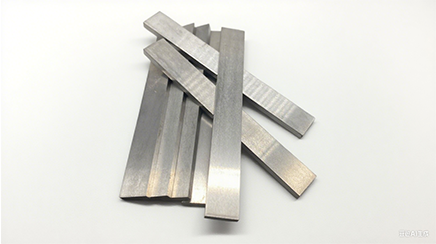
When downstream mold shops receive these heavy steel blocks, the machining environment on the shop floor is governed by strict physical limits:
· Spindle speed is usually set in the high-frequency range of 8,000–12,000 rpm.
· Feed rate is tightly controlled at around 1,500 mm/min.
· Roughing depth per pass is typically limited to 0.2–0.5 mm.
· Coolant is continuously sprayed at 20 L/min to flush chips and reduce heat.
If the material were ordinary soft steel, it would have to be sent out for a second round of heat treatment after machining. Reheating to temperatures above 1,000°C can cause a cavity originally machined to 0.01 mm precision to expand in volume by 0.3%–0.5%.
For a 1-meter-long automotive bumper mold, a 0.5% deformation rate means an absolute dimensional deviation of a full 5 mm. On an assembly line, robotic arms cannot accurately fit plastic parts into frame holes if the tolerance exceeds 0.1 mm.
A material with hardness fixed in advance completely removes the need for secondary furnace treatment. The dimensions machined on the CNC are the final dimensions used in production. A polisher then finishes the cavity surface by hand with 600- to 1200-grit sandpaper until the metal reaches a mirror finish with a surface roughness of Ra 0.05 μm.
The locking force applied by the clamping cylinder often reaches 1,000 to 3,000 tons. Molten plastic at up to 250°C is injected into the steel cavity in a fraction of a second under pressures as high as 150 MPa.
Under these extreme cyclic injection stresses, every physical property of the mold material has to meet specification:
· Yield strength must exceed 800 MPa to prevent cavity collapse under pressure.
· Tensile strength must remain in the 900–1000 MPa range to withstand repeated mold opening forces.
· Thermal conductivity must stay around 29 W/(m·K) to ensure rapid cooling and solidification of the plastic.
· Carbon content must be tightly controlled within 0.28%–0.40% to balance hardness and toughness.
For a standard 600 × 600 × 300 mm TV back-cover mold, using a no-heat-treatment material can eliminate as much as 7 days of outsourced hardening turnaround. Overall mold delivery time can shrink from 45 days to 35 days, or even less.
Heat treatment shops typically charge by weight, with quenching costs around RMB 3–5 per kilogram. For a 2-ton mold steel plate, skipping outsourced quenching alone can save well over RMB 10,000. It also removes the risk of cracking and scrap caused by outsourced heat treatment.
In a mold shop in Shenzhen, an operator is roughing 1.2311 steel—the European grade equivalent of P20—using a 20 mm carbide end mill. Friction between the insert and the steel creates localized temperatures of up to 600°C, sending pale blue metal chips flying like sparks.
On a 32 HRC steel plate, spindle load reaches about 65%. Raise the hardness by just 5 HRC, and tool wear increases exponentially. An imported CNC milling cutter worth RMB 800 may start chipping in under 2 hours.
The precise ratio of trace alloying elements is what defines the material’s physical performance:
· 1.4%–1.6% manganese significantly improves hardenability in large steel sections.
· 1.8%–2.0% chromium enhances corrosion resistance and wear resistance in the metal matrix.
· 0.15%–0.25% molybdenum helps prevent brittleness during high-temperature tempering.
· Harmful impurities such as sulfur and phosphorus are strictly limited to below 0.03%.
A high-sensitivity ultrasonic probe glides evenly across the steel surface. The waveform on the screen shows no shrinkage cavities or microcracks larger than 2 mm. Massive steel ingots are upset and drawn under a 5,000-ton forging press at a forging ratio of 3–4, refining the internal grain structure to ASTM grain size 7 or finer.
In extra-thick steel blocks over 400 mm thick, the hardness difference between the core and the surface is tightly controlled within 2 HRC. During injection molding, 15°C cooling water circulates through channels located just 15 mm below the cavity surface at a speed of 2 m/s.
Hundreds of thousands of PC or ABS pellets melt inside the extruder screw at high temperature. Holding and cooling time in the mold is usually only 8–15 seconds.
Three Key Advantages
A 1.5-meter automotive bumper mold typically consumes a full 8 tons of P20 steel. The CNC operator loads tens of megabytes of G-code into a five-axis machining center. The total length of the toolpath across the complex 3D surface can exceed 30 kilometers. A dimensional deviation of even 0.05 mm on the steel block can keep the headlamp from fitting into its designed gap on the final assembly line.
If you buy unhardened soft steel at 15 HRC, the initial milling is certainly easier. But before delivery, the heavy steel still has to be heated through in a 1,000°C vacuum furnace. The moment it is quenched, internal stress explodes, and the originally straight parting surface can warp unpredictably by 2–3 mm.
A toolmaker then has to spend 5 full days hand-fitting the mold with an angle grinder and red lead paste. TIG welding at 120 amps may be needed to build material back up in sunken areas, but the heat from welding brings another round of distortion. A steel delivered at 30 HRC cuts off that whole nightmare. Once machined, the 3D coordinate values stay stable all the way to production.
In Shenzhen’s Huaqiangbei consumer electronics market, product cycles are often compressed into just 6 months. The mold lead time for a new tablet back cover may be contractually fixed at 15 days. One round trip to an outsourced heat-treatment shop—counting logistics, furnace queue time, heating, quenching, and cooling—can consume at least 4 full days.
Remove the quenching step, and the mold manufacturing cycle is physically shortened by almost 30%. Heat treatment shops charge by weight, typically RMB 4–4.5 per kilogram. For a printer housing mold weighing around 800 kg, skipping quenching alone can save RMB 3,200 in direct profit.
A real production schedule from a mold shop makes the difference clear:
| Process Step (800 kg mold example) | Traditional soft steel timeline | Pre-hardened P20 timeline | Estimated cost difference |
| CNC roughing and finishing | 12 days | 14 days (slightly slower cutting due to higher hardness) | About RMB 800 more in CNC machine time |
| Outsourced high-temperature quenching and tempering | 4 days | 0 days | Saves RMB 3,200 in heat-treatment cost |
| Distortion repair and manual grinding | 5 days | 1 day (only routine fitting needed) | Saves about RMB 2,500 in labor |
| Total delivery schedule | 21 days | 15 days | Saves nearly RMB 5,000 and delivers 6 days earlier |
Even though purchased steel plate arrives at 30 HRC, the cutting window is still generous in practical terms. A spindle set to 8,000 rpm drives a 10 mm four-flute end mill at a feed rate of 1,200 mm/min. The flying chips reach nearly 600°C, showing a blue oxidized color in the air.
A TiAlN-coated tool can withstand instantaneous cutting temperatures of up to 800°C. A quality imported carbide end mill costing RMB 150 can stay sharp for 12–15 hours when machining P20. Coolant mixed at 5% concentration is delivered at 30 L/min to keep the tool cool.
Try forcing the same cutter into a hardened specialty steel at 52 HRC, and the physical rules flip completely. The cutter may go dull or chip in under 2 hours. At that point, the operator is forced to stop the machine and switch to slow EDM to remove the metal little by little.
A copper electrode in kerosene releases high-temperature arcs tens of thousands of times per second. EDM removes only a few dozen grams of metal per hour, with productivity roughly 1/50 that of CNC milling. The preset hardness of P20 sits right on the safe side of the physical limit for efficient CNC machining.
The mold’s intricate cooling channels must be drilled through a solid steel block with a deep-hole drill. A 20 mm carbide gun drill has to accurately penetrate 800 mm of metal. At 30 HRC, the gun drill can still maintain a drilling speed of 50 mm/min, producing smooth spiral chips.
At the finishing stage, a polishing technician applies 3000-grit diamond compound to a wool wheel. A pneumatic grinder runs at 20,000 rpm and works the cavity wall for 8 hours, gradually pushing the surface roughness down to Ra 0.02 μm and producing a bright, mirror-like finish.
On the production line, the screw of the injection molding machine forces 220°C molten ABS forward. The plastic enters the sealed mirror-polished cavity at 100 MPa in just 0.3 seconds. Even after 300,000 cycles of high pressure, rapid heating, and rapid cooling, the mold’s steel parting surface still closes perfectly.
Ejector pins then push the finished plastic housing off the steel surface with 150 kg of force. The inspector checks the edge of the part with a caliper. The molded product is smooth and clean, with dimensional deviation tightly held within a 0.02 mm tolerance band and no visible flash.
Application Scenarios
In an injection workshop at an automotive parts plant in Ningbo, a Haitian injection molding machine weighing 150 tons with a clamping force of 3,200 tons is running at full volume. A 1.8-meter P20 mold is locked shut by hydraulic arms with perfect alignment.
The nozzle injects about 4.2 kg of modified PP into the cavity at 120 MPa in just 4.5 seconds. At that moment, the plastic melt is around 240°C and gives off a burnt odor.
Automotive bumpers are large parts, and the required draft angle in the cavity can be as tight as 0.5°. Steel maintained around 30 HRC is strong enough to withstand thousands of high-pressure cycles every day without cavity collapse over a two-year mass-production run.
The shop supervisor, Old Li, watches the production counter and says, “A finished mold costs more than RMB 600,000. Once it goes on the machine, it has to make at least 300,000 shots to pay for itself. If the steel fails and the line stops for one day, we lose RMB 80,000.”
Engineers usually reserve materials that have not gone through a second furnace cycle but already have working strength for large structural molds over 800 mm in size, such as:
· SUV door interior panels longer than 1,200 mm
· Automotive instrument panel housings with walls just 2.5 mm thick and more than 100 clip holes
· Engine underbody covers with complex curved surfaces and intersecting reinforcement ribs
Shift the view to the appliance manufacturing base in Shunde, where a new 65-inch TV back cover comes off the line every 12 seconds. The mold used to form it weighs 4.5 tons and is assembled from five pre-hardened steel plates, each 250 mm thick.
The wall thickness of a TV back cover is usually a very thin 2.0 mm, yet inside it are more than 70 screw bosses used to mount the power supply and mainboard. As high-temperature molten ABS races through the cavity, the lateral force acting on fine mold features can exceed 500 kg.
The cutter machines 45 mm deep vent slots into steel delivered at 32 HRC. The high-strength metal matrix resists the continuous packing pressure of the injection machine, keeping diagonal dimension error on the TV housing within a narrow 0.1 mm tolerance band.
An apprentice at the polishing bench rubs a dead corner of the cavity with 400-grit oil stone and says, “TV panel molds are most vulnerable to pitting during texturing. Luckily, the steel ingots are forged densely enough now that the acid-etched grain comes out as consistent as real leather.”
In the home-appliance industry, mold lead time is often rigidly capped at 25 days. A vacuum furnace at the heat-treatment shop can take a full day just to ramp up. Skipping outsourced heat treatment allows manufacturers to take on high-value overseas orders with extremely tight deadlines. Typical appliance applications also include:
· The transparent outer ring of a 10 kg front-load washing machine door
· High-gloss front panels for standing air conditioners
· Double-door refrigerator drawers that mold four internal compartments at once
On a daily goods production line in Yiwu, 50-liter translucent storage bins are stacked like hills in the warehouse. 800 g of PE pellets are heated to 210°C in a single-screw extruder and then injected into the mold of an 800-ton injection machine.
The mold for the storage box is surrounded by reinforcing-rib cavities up to 150 mm deep. When the CNC machine cuts these deep grooves, tool overhang exceeds 10 times the tool diameter. Pre-hardened material makes the cutting load far more uniform and prevents the tool bar from vibrating by even 0.02 mm.
The steel’s carbon content is controlled at around 0.35%, combined with 1.5% manganese, so a one-meter square steel module shows less than 2 HRC difference in hardness from surface to center. The four roller slots at the bottom of the storage bin maintain excellent concentricity every time the part is ejected.
In Chenghai, Guangdong, toy factories consume tens of thousands of tons of plastic every year. A large children’s slide mold may require nearly 2 tons of P20 steel, with the CNC machine cutting a 400 mm deep 3D surface into a 1.2 × 1.2 meter steel plate.
Common Uses
Large Plastic Molds
Take apart a 40 kg automotive bumper mold or the rear-cover mold of an 85-inch TV, and there is more than an 85% chance that the core supporting material is P20. It is pre-hardened at the mill to 28–32 HRC, a seemingly ordinary number that in reality sits at the ideal balance point between “easy enough for cutting tools to machine” and “strong enough to withstand tens of thousands of clamp cycles.”
The automotive industry relies on P20 almost obsessively. A single door trim mold often has to withstand 1,500 to 2,500 tons of clamping force. If the steel structure is not uniform enough, even a microcrack of just 0.1 mm can scrap the entire mold after hundreds of thousands of high-pressure cycles. P20’s excellent hardenability means that even when section thickness exceeds 400 mm, the hardness difference between the core and the surface can still be held within 3 HRC, allowing dimensional tolerance on large molded parts to remain stable at ±0.05 mm.
This balance is not only about durability. It also saves time and money:
· Eliminating vacuum quenching can save 7–10 days on a single large mold.
· It avoids the 0.02% linear shrinkage risk caused by high-temperature quenching.
· Even after 72 hours of continuous operation at 250°C, hardness loss is almost zero.
· Repair welding has a very high success rate. Even if a textured surface is damaged, TIG repair leaves almost no visible color difference.
What appliance manufacturers value most in P20 is its cleanliness. Because P20 is often vacuum-degassed during melting through VD or VAD processing, oxygen content in the molten steel can be reduced to below 20 ppm.
In this kind of industrial contest, the details determine yield:
· Carbon content remains stable at 0.28%–0.40%, ensuring proper fusion between the weld layer and the base metal.
· Chromium content of around 1.4%–2.0% provides the necessary anti-rust protection.
· Molybdenum adds high-temperature toughness and helps prevent thermal fatigue during injection cycles.
· Even under 300 clamp cycles per hour, edge collapse remains at the micron level.
For ordinary plastic pipe extrusion or simple industrial pallet molds, P20 shows the same kind of overwhelming practicality. It is not as expensive or difficult to machine as high-end stainless tool steel, and it is far more stable than ordinary carbon steel. A typical P20 mold, under normal maintenance—such as spraying rust inhibitor every 50,000 shots—can easily last 300,000 to 500,000 injection cycles.
Low-Melting-Point Metals
Next to the melting furnace in a hardware die-casting plant in Wenzhou, the red digits on the thermometer flicker at 420°C. Inside the crucible, bright silvery molten Zamak 3 zinc alloy rolls and churns, waiting to be injected into a 150-ton cold-chamber die-casting machine two meters away.
The shot piston moves forward at 40 m/s, slamming the molten zinc into a cavity cut into P20 steel. With an initial hardness of around 30 HRC, the steel handles the mechanical shock of the molten metal perfectly.
Temperature is the hard physical red line here. Pure aluminum melts at 660°C. Inject aluminum into a mold made of ordinary steel without proper heat treatment, and the cavity surface will develop a dense network of thermal cracks in fewer than 2,000 shots.
| Alloy Type | Furnace Temperature Setting (°C) | Expected Mold Life (shots) | Typical Die-Cast Products |
| Zamak 3 zinc alloy | 410–430 | 400,000–600,000 | Zipper pulls, luggage hardware |
| Zamak 5 zinc alloy | 430–450 | 350,000–500,000 | Automotive door handles, heavy-duty locks |
| Tin-lead mixed alloy | 250–280 | >800,000 | Fishing sinkers, miniature figures |
| A380 die-cast aluminum alloy | 650–680 | <2,000 (severe thermal fatigue) | Must be replaced with H13 steel |
At 420°C, molten zinc sits right at a safe physical balance point. A mold temperature controller keeps the mold body between 180°C and 220°C through internal thermal-oil channels, preventing cold shuts caused by excessive temperature differences.
On a YKK zipper pull production line, a 400 mm mold plate contains 64 tiny cavities. In 0.8 seconds, one cycle forms 64 zipper pulls, with shrinkage tightly calculated and controlled at 1.1%.
Blue light flashes in the EDM gap. A copper electrode carrying 5 amps of current engraves a brand mark only 0.15 mm deep into the steel surface, with dimensional tolerance kept within 0.02 mm.
Heavy-duty security door handles need to withstand high pulling loads, so the workshop switches to Zamak 5 with tensile strength of 330 MPa. The sprue bushing is pressed firmly against the nozzle, and the pressure build-up to 15 MPa is completed in just 15 milliseconds.
To obtain a smooth surface on the zinc casting, the toolmaker hand-polishes the master with 600- to 1000-grit sandpaper until roughness drops below Ra 0.4 μm, laying the physical foundation for later electroplating.
Routine maintenance includes:
· Spraying a water-based release agent containing 1% graphite
· Cleaning zinc residue from vent grooves every 15,000 shots
· Checking whether the parting surface has collapsed by more than 0.03 mm
· Reapplying high-temperature molybdenum disulfide grease to guide pins of 20 mm diameter
A 1:64 scale die-cast toy car shell has extremely strict weight requirements. A 35 g body shell may have metal walls only 1.2 mm thick, so the molten metal must fill every fine corner within 0.05 seconds.
Defective parts with tiny pits are thrown back into a cart and returned to the furnace for remelting. Qualified zinc parts are then sent to the plating line, where they receive a 20 μm layer of acid copper and nickel. Any pinhole defect will cause blistering and peeling in the plating layer.
The cooling channels inside the steel block are intricately arranged, with water pipes machined to a uniform inner diameter of 8 mm. Cooling water at 25°C flows at 12 L/min, removing heat from the molten zinc and ensuring that the casting temperature falls below 150°C before ejection.
On the specialty steel market, H13 die-casting mold steel retails at about RMB 35/kg, and still requires another RMB 1,500 for vacuum hardening after machining. P20 costs about RMB 18/kg and can go straight onto the machine. For a toy car mold weighing 200 kg, that cuts the cost almost in half.
Once the shot counter passes 300,000 cycles, fatigue starts to appear around the gate area. High-speed molten zinc carrying tiny oxide particles gradually erodes the runner walls like a water jet, especially where the hardness is only 32 HRC.
The mold repair technician picks up a TIG torch and uses 0.8 mm ER420 welding wire to rebuild worn areas. Before welding, the entire P20 steel plate is preheated to 200°C in an industrial oven to prevent microcracking from rapid local heating.
Move over to the station producing fishing sinkers, where molten lead is held at 327°C. Under such a low thermal load, a well-polished mold can easily exceed 1 million die-casting cycles while maintaining its original surface flatness.
The ejector plate moves forward 25 mm under hydraulic force. 64 sleeve ejector pins, each 1.5 mm in diameter, push the still-warm tree-shaped zinc runner out of the cavity and drop it onto the conveyor below.
A robot sprays a fine mist of release agent into the cavity to cool it down. Two seconds later, the moving and fixed halves close again under 120 tons of hydraulic force, waiting for the next shot of molten metal.
Components and Mold Bases
Inside a gantry machining center in Kunshan, the spindle is cutting downward into a steel plate 1,200 mm long and 800 mm wide at 800 rpm. Milky coolant pours across the cutter like a waterfall, carrying away friction heat of up to 300°C.
The 2.5-ton steel block on the machine bed will become the mold base for a double-door refrigerator housing mold. The injection-forming area inside will be fitted with S136 mirror-finish steel costing RMB 80/kg, while the large outer supporting frame is made entirely from P20 steel at around RMB 15/kg.
The material cost difference for a large appliance mold base can reach RMB 160,000. Engineers allocate the premium steel only where needed, while the outer support structure needs only the basic 30 HRC hardness to resist clamping shock.
A deep-hole drill enters the side of the steel plate and advances at 45 mm/min. Two cooling channels, each 25 mm in diameter and 1.2 meters long, pass completely through the base, leaving room for continuous 24-hour circulation of industrial cooling water.
Runout at the drill tip must be controlled within 0.15 mm. Once a deep-hole operation drifts off line, the water channel can break into a reserved ejector-pin hole, and a steel plate worth nearly RMB 40,000 becomes scrap.
The fitter drives four guide pillars, each 50 mm in diameter, into the installation holes at the corners of the mold base. The interference allowance is only 0.02 mm, and every strike from the 5 kg copper hammer lands with a dull metallic thud.
The guide pillars are induction-hardened to 58 HRC, while the surrounding base hole walls remain around 30 HRC. This soft-hard combination ensures that the injection mold can open and close 3,000 times a day without the bore seizing from friction.
Beyond mold bases, the same material is also machined into track support plates for hydraulic excavators in an engineering machinery plant in Xuzhou. A square steel plate 80 mm thick has to withstand a dynamic load of 50 tons transmitted through the excavator’s slew bearing.
The steel’s as-delivered 850 MPa yield strength eliminates the need for a second quench after rough machining. Workers mount a solid round bar 3 meters long and 150 mm in diameter onto a CNC lathe. The insert feeds along the X-axis and turns the transmission shaft profile, keeping runout within 0.05 mm.
Typical machining parameters include:
· Feed rate set to 0.3 mm/rev
· Radial depth of cut up to 4 mm
· Tungsten carbide insert life of about 15 workpieces
· Surface roughness held at Ra 1.6 μm
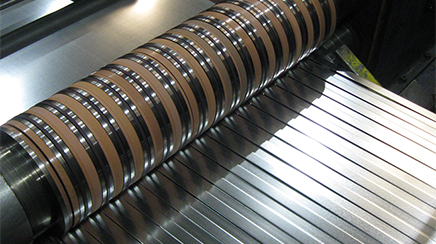
When machining connecting rods for a heavy punch press, the cutter mills 40 mm deep weight-reduction slots into the steel plate. Even after removing 30% of the material volume, the uniform internal structure keeps bending deformation within 0.3 mm.
In the inspection room, a coordinate measuring machine lightly touches the addendum circle of a gear shaft. After 3 hours on a hobbing machine, a spur gear with module 5 and 45 teeth is finished. Even without carburizing, the tooth surface already has basic resistance to pitting.
In an alloy steel with around 0.3% carbon, manganese and chromium improve hardenability. Even in a solid forged round bar 500 mm thick, the hardness difference from the surface to the center remains within 2 HRC.
In the assembly shop, workers are building a 2,000-ton servo press. The wear-resistant guide backing plate for the base slider is made from two 1.5-meter pre-hardened steel plates coated with thick molybdenum disulfide grease.
Using a torque wrench, installers tighten M24 high-strength bolts to 800 N·m. After machining on a large surface grinder, flatness on the underside of the steel plate reaches 0.015 mm, allowing it to seat almost perfectly against the machine bed.
A CNC cutting machine blows out a 2,000°C flame, cutting a 120 mm thick steel plate into an irregular flange blank according to the drawing. The nozzle moves steadily at 300 mm/min, and the metal at the cut edge melts into glowing orange droplets under high-temperature oxidation.
Typical parameters are:
· Outer diameter cut with 3 mm machining allowance
· Heat-affected zone depth of about 5–8 mm
· Stress-relief annealing at 600°C for 4 hours
· 24 mounting holes drilled to 22 mm diameter
The 400 kg flange is then lifted onto the table of a vertical lathe. As the rotary table turns at 60 rpm, the tool cuts a 3 mm deep sealing groove into the face, leaving behind fine concentric metal lines.
The inspector uses a Shore hardness tester to check five random points on the flange surface. The display fluctuates between 29 and 31 HRC. A blue approval stamp is placed on the QC report, and the part is sent to the rust-prevention oil tank.
Supply Forms
Tailored to Mold Design
When we receive the drawing for an automotive bumper injection mold, the overall size often exceeds 1.2 meters, and may even reach 2 meters. Purchase orders for such molds almost always specify large forged blocks with thicknesses typically between 400 and 800 mm. To process large-dimension P20, the steel mill uses a 3,000–5,000 ton hydraulic press for multidirectional upsetting and drawing, compacting internal looseness and shrinkage cavities under enormous pressure.
Ultrasonic testing generally has to meet SEP1921 D/d grade. Otherwise, if porosity is exposed later during deep-cavity machining, dozens of hours of CNC milling expense are lost instantly. For ordinary appliance housings like TV back covers, drawing thickness is usually 150–300 mm. Standard wide plates are often purchased in 2000 × 1000 mm sizes, and efficient nesting can keep offcut loss under 8%.
Now look at the slender internal mold features—cooling towers, round cores, or guide pillars for the ejection system. Their shape immediately points to round bar as the preferred stock form. Hot-rolled round bars on the market start at Φ20 mm and can go up to about Φ350 mm. A machinist takes a Φ80 mm round bar, mounts it on a lathe, and turns the outer diameter with a 3 mm depth of cut per pass, sending spiral chips flying.
If you tried to mill a 100 × 100 mm square block down into a Φ80 mm cylinder, at least 45% of the material cost would be wasted. The milling process would also take roughly three times longer than turning. Suppliers understand how shops process these parts, so warehouses typically keep common diameters such as 50, 65, 80, and 100 mm in stock, usually cut into standard 6-meter lengths.
To account for transport damage and surface decarburization, purchasing tolerances are tightly standardized:
· Steel plates up to 100 mm thick: 3–5 mm allowance per side
· Large forged blocks over 300 mm thick: 10–15 mm allowance per side
· Round bars below Φ50 mm: oversize diameter by 2–3 mm
· Round bars above Φ100 mm: oversize diameter by 5–8 mm
Metallurgists adjust the composition with 1.4%–1.6% chromium and 0.3%–0.5% molybdenum. During pre-hardening with water quench and oil cooling, the surface hardness of a large block can reach 32 HRC, while the center may fall to 28 HRC.
When designing a washing-machine drum mold cavity 200 mm deep, the tool cuts farther into the steel and spindle load often drops slightly, with cutting force decreasing by about 15%. Large steel mills use special cross-section homogenizing heat treatment to keep the hardness difference between core and surface within 2 HRC.
Lifters and slides are used in molds to handle undercuts, and these parts are often only 20–50 mm wide and 100–300 mm long. The purchase order for them usually calls for hot-rolled flat bar, such as 30 × 150 mm or 50 × 200 mm, with rolling thickness tolerance typically around ±0.5 mm.
A fitter can take the flat bar, pass it over a grinder a few times with a 60-grit wheel, and bring flatness within 0.02 mm. Compared with flame-cutting small strips from a massive 2-ton plate, buying ready-made flat bar can save about RMB 1.5 per kilogram in machining cost.
The delivered surface condition often determines what machine the first operation will use. Common forms include:
· Hot-rolled black skin: surface covered with 0.5–1 mm of iron oxide scale
· Rough turned / rough milled finish: tool marks at Ra 12.5–25 μm
· Ground precision plate: top and bottom surfaces finished to Ra 3.2 μm
· Milled-and-ground six-face stock: diagonal tolerance controlled within ±0.05 mm
Automotive instrument panel molds often require oversized blocks up to 2.5 meters long and 8 tons in weight. Many suppliers use ESR (electroslag remelting) to reduce impurities. Sulfur content is tightly controlled below 0.003%, and the reduction in manganese sulfide inclusions allows mirror polishing to reach an optical-grade finish equivalent to 12,000 grit.
When the drawing calls for extremely high surface quality, such as for transparent PC parts, the purchasing system will specify vacuum-degassed precision stock. After the order is placed, a large bandsaw may need a full 5 hours to cut through a 500 mm thick block, with blade speed set at 25 m/min and coolant continuously flushing the cut.
Cost and Machining
Inside the machine shop, a gantry machining center with a 2-meter travel is cutting into a P20 steel plate. A Φ63 mm face mill spins at 800 rpm, and feed is set to 1,200 mm/min. Flying chips are washed into the chip conveyor by high-pressure coolant, accompanied by a harsh metallic scraping sound.
Tooling consumption stands out sharply on the cost sheet. For material at 28–32 HRC, a TiAlN-coated carbide insert costing RMB 45 per piece has a maximum roughing life of only about 180 minutes. Every three hours, the operator has to stop the machine and replace all four cutting edges with a T15 hex key.
| Measured Steel Hardness (HRC) | Recommended Insert Coating | Rough Milling Depth (mm) | Suggested Spindle Speed (RPM) | Feed Rate (mm/min) |
| 28 | Standard conventional coating | 1.5–2.0 | 800–1000 | 1200–1500 |
| 30 | Composite nano coating | 1.0–1.5 | 600–800 | 1000–1200 |
| 32 | High-aluminum titanium coating | 0.5–1.0 | 500–700 | 800–1000 |
A difference of just 2 HRC on the hardness tester is enough to make the operator dial back feed by 20%. A cavity that originally takes 40 hours to remove 30 kg of excess metal at 30 HRC will take another 8 hours if hardness rises to 32 HRC.
Heavy CNC milling on the market typically costs RMB 120–150 per hour. Those extra 8 hours of machine time can wipe out nearly RMB 1,000 in profit. The few cents per kilogram that the purchasing manager saves on raw steel are instantly crushed by expensive machine time.
A hot-rolled black-skin block may cost as little as RMB 10.5/kg, about RMB 1.5/kg cheaper than bright-ground stock. For a 2-ton automotive door mold base, that looks like a savings of RMB 3,000.
But then the gantry mill has to spend 4 hours stripping away the black scale layer full of microcracks and hard oxides using a heavy Φ160 mm cutter head. The sand particles and impurities in the scale make insert chipping much more likely. Out of those 2 tons, roughly 150 kg is nothing but machining allowance.
When sold as scrap, the curled steel chips are worth only about RMB 2.5/kg. Steel bought at RMB 10.5/kg loses about four times its value once it turns into swarf. Experienced mold shop owners know this math well. Many would rather pay RMB 12/kg for six-face precision-milled plate and put it straight onto the machine for finishing.
Deep-hole drilling in 30 HRC steel is a difficult operation. Mold interiors are full of cooling channels 10 mm in diameter and 400 mm deep. A conventional HSS twist drill often burns up before reaching 50 mm because chips cannot evacuate properly, so machinists switch to a carbide U-drill with through-coolant.
With a 7 MPa high-pressure pump, the U-drill forces an 8% emulsion coolant straight to the bottom of the hole. The coolant vaporizes instantly at the cutting zone, carrying away heat and blasting chips out of the hole. One imported U-drill can cost RMB 1,200. If the cutting parameters are wrong and it snaps inside the hole, just paying someone to burn it out with EDM can cost another RMB 600.
Tapping is usually scheduled as the final machining step. To cut an M16 thread in P20, the pilot hole has to be drilled precisely to 14 mm. The operator coats the tap with extreme-pressure cutting oil rich in sulfur and phosphorus additives, then slows the spindle to 80 rpm to prevent the tap from breaking inside a mold base worth tens of thousands of yuan.
For sharp corners or deep grooves beyond the reach of a milling cutter, only EDM can do the job. A copper electrode carrying high-frequency pulses of tens of thousands of volts breaks down a gap of only a few microns inside a kerosene dielectric bath. The discharge produces temperatures in the thousands of degrees, melting metal at a painfully slow rate of just 2–3 cm³ per hour.
After EDM, the steel surface is left with a white layer about 0.02 mm thick. It is extremely hard and full of microscopic cracks, so it must be completely polished away to prevent sticking during injection molding. Holding a pneumatic polisher, the toolmaker uses 400-grit diamond compound and may spend 6 hours polishing a 1 m² cavity surface.
In a complete mold BOM, material cost usually accounts for only 25%–30% of the total. Machining time from milling, EDM, and wire cutting takes nearly 50%, while the remaining 20% is consumed by assembly and manual polishing labor.
A 22 kW spindle motor, together with servo drives and coolant pumps, can consume over RMB 150 of electricity per day at full load. To spread that fixed cost, machine operators work day and night shifts so the equipment can keep cutting around the clock.