

Better Chip Flow
Why Chip Evacuation Matters
A machine spindle can spin at 12,000 rpm while aggressively cutting into an aluminum block, and the friction temperature can spike past 600°C in an instant. In a real workshop, you do not see the movie-style shower of sparks. What actually happens is that thousands of strips of red-hot metal are thrown out every second.
Put a 50 kg solid aluminum block in the machine and cut for 40 minutes, and what remains may be a 15 kg aircraft seat frame. The 35 kg of metal removed carries away roughly 80% of the heat generated during cutting.
If those hot chips do not fall away and instead stick to the unfinished workpiece, the heat transfers back within seconds. Metal expands when heated. If the local temperature of an aluminum part rises by 20°C, its length can quietly grow by about 0.02 mm.
Automotive engine components are built to extremely tight tolerances, often no more than 0.005 mm, roughly one-tenth the thickness of a human hair. Even a tiny amount of thermal expansion can cause a costly cutting tool to remove too much material while following the programmed path.
Once the part cools and contracts, the dimensions are out of spec, and a cylinder block worth thousands of yuan can instantly become scrap. When fallen chips hit air and coolant, their surfaces harden immediately, and their hardness can rise by more than 30% compared with the original part.
Then, when the spindle comes back across with a coated end mill costing RMB 800 per cutter, any collision with uncleared hardened chips becomes a classic egg-against-stone impact.
· A 0.002 mm titanium coating can be scratched within 3 milliseconds
· The machine load can surge from 40% to 120% in an instant
· A smooth workpiece surface can be gouged with a 0.1 mm deep scratch
· The steady hum of cutting can turn into a shrill, high-frequency scream
To prevent a shattered insert from flying loose and injuring someone, the operator slams the red emergency stop button. Then he wrestles open the heavy steel door and spends 3 to 5 minutes blasting chips out of hidden corners with an industrial air gun at 8 kg of pressure.
In a factory running two shifts a day, if one machine has to stop six times daily for manual chip removal, the monthly loss in idle-time depreciation alone can exceed RMB 4,500. Some plants spend hundreds of thousands of yuan installing 70 kg water-pressure spray systems to force chips out, yet deep-hole machining still defeats them.
A 150 mm deep mold cavity is like a narrow well. When high-pressure coolant hits the bottom and rebounds, it stirs the metal sludge into chaos instead of clearing it. Water cannot wash it out, and different chip forms create different kinds of damage.
· Long ribbon chips a meter in length wrap tightly around the rotating toolholder
· Short C-shaped chips easily jam into hydraulic gaps in the fixture
· Powder-like fine swarf slips into the guideways and accelerates mechanical wear
The coolant circulation system below is especially vulnerable. Once fine chips clog the screen at the bottom of a 500 L tank, the pump can no longer draw coolant properly, and the cutting tool loses its cooling, leaving the alloy edge to run dry under extreme friction.
When drilling 304 stainless steel, an uncooled drill tip can exceed 800°C within 15 seconds. A drill that was originally hard becomes soft and twisted like plastic under the heat, then breaks off inside the part with a dull snap.
To remove a broken drill from a deep hole, the machinist has to bring over an EDM unit wearing dark protective glasses. Using a 0.5 mm brass tube, he slowly burns the broken tool away with electrical discharge over the course of two full hours.
To prevent chip-related defects from spreading, inspectors often have no choice but to raise inspection coverage from 10% to 100%. A task that would normally take half an hour on a CMM can drag out to four hours.

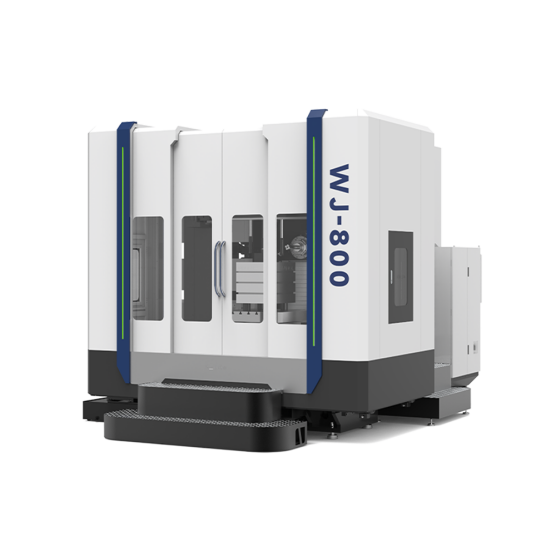
Gravity Advantage
Picture a large face mill 200 mm in diameter and weighing 3 kg spinning at 8,000 rpm while chewing through hard 45 steel plate. The chips it produces have nowhere to go. Once flung out, they simply fall straight back under gravity into the 120 mm deep pocket that has just been machined.
A mold cavity that holds only 2 L of coolant can be packed solid with 4 kg of curled chips in less than 3 minutes. Coolant at 50 kg of pressure is forced into the cavity, but the chips at the bottom still do not move. Instead, the high-pressure jet creates a vortex in the narrow pocket, whipping piles of chips into a violent spin.
Inside that whirlpool, the chips act like thousands of tiny files, scratching a surface that had previously been machined to a mirror-like Ra0.8 finish. The solution used by a horizontal machine is elegantly simple: it rotates the 600 kg cutting head by 90 degrees. Instead of pushing downward from above, the tool cuts horizontally, like a contractor drilling into a wall.
At that moment, gravity stops being a problem and becomes an ally. Every 0.5 mm thick chip that comes off is immediately pulled downward. With nothing in its way, the chip leaves the cutting edge and drops in less than 0.1 seconds at 9.8 m/s², landing directly in the 800 mm wide conveyor below.
One machining engineer once compared two similarly priced machines to see how much difference the change in gravity direction really made during roughing. Both machines were fitted with the same carbide cutter and used to rough the same 80 kg cast iron block continuously for 120 minutes.
| Test Item | Vertical Downward Cutting | Horizontal Cutting |
| Weight of chips left in the cavity | 12.5 kg | 0.3 kg |
| Chip conveyor utilization | 35% | 85% |
| Number of insert failures caused by chip crushing | 4 times | 0 times |
| Coolant temperature rise after cutting | 15°C | 4°C |
The 12.5 kg of trapped chips pressing against a thin aluminum wall only 0.5 mm thick is equivalent to hanging a 12 kg dumbbell from it, creating a load of roughly 120 N. That pressure can bend a previously straight wall by 0.03 mm, a change that is invisible to the naked eye. In the horizontal-cutting test, only 0.3 kg of fine chips remained, not even enough to cloud the coolant.
The chip conveyor running at 85% capacity proved that most of the chips fell obediently onto the conveyor and were carried away. In one plant, the scrap truck could haul 500 kg more of clean, dry iron chips per day from the horizontal machining area alone. The benefits become even more obvious in deep-hole drilling.
A 350 mm long gun drill only 8 mm in diameter, thinner than a chopstick, enters an automotive engine housing horizontally. Gravity constantly pulls chips downward out of the bore, so the chip flute remains clear. Coolant oil at 80 kg of pressure flows smoothly through the open channel and easily pushes each freshly cut 0.05 g chip back out of the hole.
By contrast, on a machine cutting downward from above, gravity packs sludge tightly at the bottom of a 300 mm deep bore. Even if the coolant motor overheats to 120°C, the high-pressure jet still cannot dislodge the accumulated chip mass. Every additional 1 mm of drill advance requires another 200 N of force just to push the packed chips aside.
Horizontal cutting also makes tombstone fixtures especially effective. On a rectangular four-sided fixture, four automotive transmission housings weighing 50 kg each can be mounted at the same time. As the table indexes 90 degrees from one face to the next, gravity automatically dumps out the residue left from the previous operation.
It is like washing a rice pot in the kitchen: turn it upside down under the tap and it cleans more easily than when it sits upright. The old problem of heat transfer is also solved by reorientation. Hot chips leaving the part at 600°C are thrown onto a sloped baffle 400 mm away.
The surface of that 5 mm thick steel baffle is coated with a very smooth PTFE non-stick layer. The red-hot chips cannot stay on a 35-degree slope and slide into the coolant tank below in under 2 seconds, where they are rapidly quenched.
Less than 5% of the total heat remains around the work area. Even a magnesium alloy housing that is highly prone to thermal distortion can hold at a safe surface temperature of 26°C after 45 minutes of continuous machining. When an inspector measures two screw holes 150 mm apart, their positional error can stay within 0.002 mm.
Turning It into Productivity
A 50 mm imported Sandvik face mill costs a real RMB 2,400. On an older machine, roughing 40 titanium alloy landing gear components meant the inserts kept chipping prematurely after striking hardened chip buildup.
Now the chips fall directly into the conveyor below and are carried away. With the same carbide cutter, tool life can last 1.5 times longer. In a single month, the savings on inserts alone can cover the RMB 8,000 base salaries of two machine operators.
The spindle no longer has to stop and wait for frequent tool changes. When a robot has to pick up and replace a 4 kg milling cutter, the process costs at least 12 seconds. Eliminating 20 insert changes a day recovers 4 full minutes of pure cutting time.
By 8 p.m., the night-shift worker turns off the workshop lights. Yet a row of horizontal machining centers occupying 40 square meters keeps cutting away in the dark.
“As long as chips do not jam into the fixture gaps, the machine can keep cutting steadily until daybreak.”
That one sentence from a veteran machinist explains why overnight unattended production becomes practical. Beside the machine sits a pallet stocker loaded with 12 standard steel plates. Each 600 mm square plate is already fixtured with unfinished automotive water-pump castings.
Gravity clears away every last bit of chip sludge from the previous cycle. So when the hydraulic arm grabs pallet No. 7 at 2 a.m., there is no chance that even a single 0.1 mm metal particle remains trapped beneath the chuck base.
If the slightest chip gets under a part, a 150 N clamping force can deform it on the spot. The next morning, the inspector checks flatness with a micrometer, and any part that exceeds the ±0.01 mm requirement becomes scrap.
Now when workers open the shop at 8 a.m., they immediately see 144 finished parts stacked neatly in the unloading area.
· The proportion of machine time run unattended overnight rose from 45% to 92%
· Electricity cost allocated per part dropped from RMB 1.2 to RMB 0.4
· Monthly aluminum ingot scrap fell from 600 kg to under 50 kg
· Only one security guard is needed at night to patrol the workshop perimeter every 2 hours
In the past, three skilled operators had to watch pressure gauges all day with air guns ready to blast chips away at any moment. Now a single apprentice with less than six months on the job can spend 40 minutes each morning replacing the castings on the pallets with a small trolley.
For military aerospace aluminum parts, inspection standards can be almost extreme. A radar microwave housing the size of a palm and weighing about 300 g must achieve a mirror-like Ra0.4 finish, and absolutely no secondary scratches are allowed.
Even a scratch finer than a human hair turns into a canyon under a 40x industrial microscope, and that alone can cause an entire military order batch to be rejected.
On older machines, less than 2 g of chips can recirculate in 15 L/min of coolant and rub repeatedly across the aluminum housing surface. Operators have no choice but to keep a 1 m wide bench covered with soft cloth next to the machine and watch every finished part with full concentration.
After each housing is machined, they spend another 3 minutes hand-polishing tiny scratches less than 0.05 mm deep with 2000-grit sandpaper. A horizontal machine removes this labor-intensive polishing step simply by letting chips fall away under gravity.
Every cut now meets only clean, fresh metal. The imported horizontal machining center may cost RMB 1.5 million up front, compared with RMB 800,000 for a standard machine.
But when it runs a full 8,000 hours a year with no downtime, the numbers become extremely compelling. The delivery pass rate climbs from an uneven 89% to a stable 99.8%.
When the factory takes on an overseas order for 20,000 stainless steel valves, it has far more confidence. The delivery schedule is pulled ahead by a full 15 days, and trucks are dispatched overnight to rush the shipment to port.
Stable Cutting
Heavy-Duty Structure
An ordinary workshop floor cannot support a machine of this class. The building foundation must be reinforced concrete capable of bearing 3 to 5 tons per square meter.
A standard vertical machining center with an 800 mm travel range may weigh only 3 to 4 tons. A horizontal machine with the same working envelope often weighs 12 to 15 tons, the equivalent of stacking more than a dozen passenger cars in one place.
That extra 7 or 8 tons of mass goes directly into the machine base and column. Many major manufacturers have long since moved away from ordinary remelted cast iron and instead specify premium Meehanite castings of grade HT300 or above. Some European brands even use synthetic mineral cast bases.
Mineral casting absorbs vibration 6 to 10 times better than ordinary cast iron. When a 100 mm diameter cutter slams into steel at a cutting speed of 800 m/min, generating impact loads of hundreds of kilograms, the base absorbs it so thoroughly that the noise is almost muted.
Cast components for machine tools are often left outdoors for half a year or even a full year before assembly. After more than 300 days of weathering and thermal cycling, the internal stresses that would otherwise cause distortion are fully released.
The iron walls of the base are often more than 45 mm thick. Strike them with a hammer and the sound is a deep, dull thud. Even after running around the clock for more than a decade, the machine frame can remain dimensionally identical to the day it left the factory.
If you look at the base from ground level, it resembles a huge upside-down capital T. The left-right axis and the front-back axis each occupy their own broad footprint, so movement on one does not interfere with the other.
A square iron mass weighing two tons supports the column as it slides along the base. The base uses a robust three-point support layout, so even when the cutting head throws back thousands of newtons of force, the load is distributed across the wide area defined by those three supports.
Even when the tall column moves several hundred millimeters forward, the 10-plus-ton machine maintains excellent balance, and the center of gravity shifts by no more than 2 to 3 mm.
· The base is filled with a grid of box ribs welded from 30 mm thick heavy steel plates
· The cross-travel guideways are at least 30% wider than those on comparable conventional machines
· The anchor bolts at all four corners are upgraded to thumb-thick M24 high-strength fasteners
· Experienced fitters hand-scrape about 20 oil-retaining pockets per square inch into the mating surfaces of the guideways and slides
Above the base stands the column, the second major wall against vibration. Modern horizontal machines no longer rely on thin, single-wall sheet structures. Instead, they use heavy double-wall box-in-box column designs.
Inside the column are hundreds of kilograms of solid iron used for balance, and some high-end models even include nitrogen cylinders capable of generating 15 kN of lifting force. The spindle head rides up and down the vertical axis at speeds of 40 m/min.
With that powerful upward nitrogen assistance, a cast-iron spindle head weighing hundreds of kilograms can move almost as if it were weightless.
The same rule that applies when cutting a hard squash with a kitchen knife applies to machining steel: the closer your hand is to the blade, the better the control. Machine designers work just as hard to minimize the distance between the spindle nose and the workpiece.
On some Japanese machines, the distance from the spindle face to the rotary table centerline has been reduced to just 50 mm. When the tool bites into HRC45 mold steel, that short overhang makes even a 0.002 mm deflection extremely difficult.
· All three linear axes use heavy-duty roller guideways 55 mm wide
· The spindle nose is supported by oversized bearings with inner diameters of 100 mm or even 130 mm
· The ballscrews that drive the machine can be as large as 50 mm in diameter with a 12 mm lead
· Each ballscrew is pre-tensioned with roughly 300 kg of force to prevent thermal bending
Multi-ton castings slide back and forth across the base thousands of times a day. Machines built for heavy-duty cutting often use wide, flat box ways lined with 2.5 mm thick wear-resistant special plastic.
These sliding ways have higher friction, but that is precisely what gives them grip. Fit a heavy turning tool and take an 8 mm deep cut into 45 steel, and although sparks may fly at the spindle, the guideway beneath still locks the moving mass in place with no lateral chatter at all.
The tool interface is equally brute-force in design. A small machine may clamp a tool with about 8 kN of force. Heavy horizontal machines are typically equipped with large interfaces such as BT50 or HSK-A100.
Insert a 300 mm long boring bar into a bore, and the machine’s internal spring stack can generate a pull force exceeding 20 kN. The taper face and flange face of the holder both seat firmly against the spindle.
That dual-contact engagement dramatically increases resistance to bending. A large face mill then spins at 1,500 rpm and aggressively removes excess stock from an automotive engine housing.
Under that violent chip-throwing impact, you can set a full glass of water on a flat surface of the machine enclosure and still not see a visible ripple on the surface.
· A large face mill can remove 10 to 12 mm of heavy stock in a single pass
· A drill as thick as a wrist can make a 60 mm hole directly through a heavy steel plate
· The machine can easily cut deep M30 threads in rough castings
· In roughing mode, material removal can reach 1,000 cm³ per minute
Gravity & Chip Evacuation
When drilling a 150 mm deep blind hole from above, the curled chips collect at the bottom of the hole and have nowhere to go.
A high-speed steel drill as thick as a thumb can do little more than grind repeatedly over chips that should already have fallen away. Under friction temperatures as high as 600°C, the metal fragments become extremely hard. When the drill edge hits them, it can chip instantly, ruining a drill worth over a thousand yuan on the spot.
Rotate the entire machine by 90 degrees so that it effectively works on its side, and the cutting scene changes completely. In a horizontal machine, the spindle approaches from the side. Newton’s law of gravity becomes the most obedient and cost-free helper on the shop floor.
Whether the machine is peeling 500 g of aluminum chips per minute or shaving off 2 kg of dense cast-iron swarf with a heavy cutter, the result is the same. The moment the tool edge leaves the part surface, the chips drop directly into the collection trough at the bottom of the machine under gravity.
To make that drop even smoother, the enclosure panels inside the machine are formed into steep slopes greater than 60 degrees. Their surfaces are coated with an extremely slick polyurethane finish.
The chips hit those sloped panels and slide away like children on a freshly waxed playground slide. With no metal debris left in the cutting zone, every pass of the tool engages only clean, fresh material.
When cutting P20 mold steel with a 12 mm solid carbide end mill, tool life on a vertical machine may be only 40 minutes. Move the same process onto a horizontal machine, and tool life can be extended to more than 75 minutes.
· Workers save at least 1.5 hours a day previously spent fishing chips out with hooks
· The probability of edge chipping caused by packed swarf drops by more than 65%
· The scrap rate in deep-hole drilling falls from 3% to 0.5%
· Because fewer chips are carried away with coolant, nearly 200 L of cutting fluid can be saved each month
| Machining Condition | Conventional Vertical Machine | Horizontal Machine |
| Drilling deep holes with depth greater than 10× diameter | The drill must be retracted every 20 mm to clear chips | The hole can be drilled to full depth in one pass without pecking |
| Machining an 80 mm deep rectangular blind cavity | Chips easily pile up 30 mm thick in the four bottom corners | No visible chip residue remains inside the cavity |
| Cutting sticky aluminum alloy | Chips easily wrap around the spindle housing | Gravity helps them break away instantly and fall into the machine sump |
On older machines, the coolant lines beside the spindle delivered only about 5 to 10 kg of pressure, enough to wash away only fine chips from the surface.
Today’s premium horizontal machines are equipped as standard with through-spindle coolant systems running at up to 70 bar. High-pressure coolant travels through internal spindle channels and exits through tiny holes in the middle of the tool.
A jet delivering 30 L/min strikes the cutting zone while the tool and workpiece are generating temperatures of up to 800°C. Freshly cut curled chips are blown instantly as far as 2 meters away onto the inside of the protective door.
On both sides of the base are troughs containing 150 mm diameter screw conveyors. Their heavy helical flights rotate continuously like meat grinders.
Each minute, the augers can drag 20 kg of oily metal chips out of the machine and discharge them into a large steel bin outside the workshop. Machining an automotive aluminum cylinder head can remove about 4.5 kg of aluminum from a single part.
On a production line with 10 horizontal machines running 24 hours a day, nearly 1 ton of metal chips can be expelled every day. If workers had to blow all of that out manually with air guns, the workshop floor would be buried in swarf up to their thighs.
When the spindle is running at 12,000 rpm, even the slightest chip residue can leave an ugly scratch as deep as 0.05 mm on the part surface.
Stable machining begins with removing every chip from the cutting zone. When a 200 mm long boring bar reaches into an automotive transmission housing, gravity makes chip removal feel as natural as breathing.
The cutting edge lightly peels away a thin strip of metal from the bore wall, and the chip curls and drops immediately. The workshop no longer hears the piercing scream caused by chips jamming under the tool.
What remains is the deep, even cutting sound of a tool engaging solid metal smoothly.
· Typical through-tool coolant holes are only 1.5 to 2 mm in diameter
· The filtration mesh for the cutting fluid is refined to 20 microns
· The hinge-belt chip conveyor at the base is driven by motors of at least 1.5 kW
· The coolant pump has enough head to reach 50 meters
· The adjacent coolant tank starts at 800 L capacity to ensure uninterrupted high-volume flushing
On ordinary drawings, a surface roughness of Ra1.6 is usually considered acceptable. In the chip-free environment of a horizontal machine, a standard carbide insert can easily produce a semi-mirror Ra0.8 finish on cast iron.
The operator no longer has to hit the stop button every few minutes. Nor does he have to struggle open the heavy machine door and dig long stringy chips off the toolholder with a hook.
Once the door is closed and an 80 kg raw iron billet is clamped onto the table, the door opens again tens of minutes later to reveal a clean surface with not even a sesame-seed-sized pile of swarf left on it.

Longer Tool Life
An insert may be no bigger than a fingernail, just 8 mm long and 4 mm thick, but its surface is coated with a 3 micron TiAlN layer. Lock it into the holder and send it into hardened steel at HRC50, and all the cutting force is concentrated onto a tiny fraction of a millimeter at the edge.
No one feels machine vibration more directly than the insert at the very front of the tool. On unstable machines, when the cutter strikes a heavy steel block at 8,000 rpm, the cutting edge can endure more than 130 micro-vibrations every second.
Even if the amplitude is only 0.01 mm, the thin coating at the cutting edge can begin to flake off in chunks within minutes, like dry biscuit crumbs.
What veteran machinists fear most is the shrill scream that sounds like fingernails scraping a blackboard. The moment that noise appears, they know the insert they were using is finished.
Run the same job on a horizontal machine that sits as solidly as rock, and the massive iron base traps the vibration inside itself. The sound at the cutting edge turns into a low, dull thud.
Each cut now sees a steady cutting force of around 450 N instead of wild fluctuations.
· A box of 10 imported turning inserts sells for RMB 800 to 1,200
· On a vibrating machine, one cutting edge may last for only 40 automotive steering knuckles
· On a stable horizontal machine, the same edge can complete 110 parts in one run
· Over a year, one production line can save nearly RMB 300,000 in insert purchases alone
In reality, the greatest enemy of an insert is not hard metal itself, but repeated thermal shock. At the point of contact, the temperature can rise to 800°C almost instantly.
If the machine vibrates, the tool skids and jumps across the surface, and the temperature can swing violently between 200°C and 900°C like a roller coaster.
The high-pressure coolant jet from the horizontal spindle makes an enormous difference. With 70 bar of pressure, it hits the hot cutting edge consistently. Because chips fall away under gravity and never block the flow path, the coolant can hold the cutting edge at a stable temperature of around 150°C.
The hard coating no longer develops dense thermal-crack networks from repeated rapid heating and cooling.
Even when machining sticky aerospace aluminum alloys, the cutting edge stays clean and free of any welded-on metal buildup.
The most convincing evidence comes from daily tool-change data in the workshop. Take a 50 mm diameter six-flute face mill removing 3 mm of stock per side from HT250 gray cast iron.
At a feed rate of 1,200 mm/min, the frequency of impact between cutter and iron is intense.
· On a vertical machine, this job usually requires a full insert change after about 45 minutes
· On a horizontal machine, chip evacuation is gravity-assisted, cutting speed rises by 20%, and the inserts still hold up
· One set of inserts can continue cutting for 120 minutes before showing only slight wear
· Tool-change stoppages fall from 6 times a day to just 2
On the surface, fewer tool changes may look like nothing more than a small saving in consumables. But every time an operator stops the machine, opens the heavy safety door, loosens screws with a hex wrench, installs new inserts, and then resets tool position, the sequence takes at least 15 minutes.
Any time the machine is not turning and cutting, it is effectively burning money.
Many custom long-reach tools costing several thousand yuan simply cannot tolerate abuse. A one-piece 400 mm solid-carbide deep-hole drill can cost at least RMB 4,500.
Its long, slender body is as fragile as a chopstick. The slightest irregular side force can snap it off instantly at the bottom of a deep hole.
The exceptionally stable linear feed of a horizontal machine provides the best possible working condition for long, slender tools. The slide advances smoothly along the heavy guideway, keeping the drill tip load steady at 600 N.
With no lateral shaking to tug it off line, a drill worth RMB 4,500 can reliably complete 3,000 deep holes.
When the owner does the year-end math, the picture becomes clear. Yes, the machine cost hundreds of thousands more up front, but every month the tool crib issues two fewer boxes of painfully expensive imported inserts.
There is also a hidden benefit outsiders rarely see: surface finish. Once a tool wears even slightly, a part surface can show draw marks as deep as 0.02 mm, even when the edge still looks intact to the naked eye.
On high-precision hydraulic valve blocks, even one such streak can cause internal oil leakage and total rejection.
The remarkably stable cutting condition allows the tool to wear in a highly uniform and very gradual way. After 80 hours of cutting in steel, a 100x magnified inspection still shows the tool edge as a smooth, rounded line.
The inner wall of the hydraulic bore reflects like a small mirror, and the measured roughness is only Ra0.4.
· Longer tool life directly reduces scrap by 3 percentage points
· The most expensive PCD tools can even remain in service for half a year on a horizontal machine without regrinding
· After every tool replacement, the first-part measurement on a CMM rarely deviates by more than 0.003 mm
· Operators no longer have to watch the spindle load meter with constant anxiety
Higher Output
Keeping the Machine Running
A skilled operator lifts a 40 lb cast-iron workpiece, bends into a machine enclosure more than a meter wide, aligns the datum surface, tightens four M16 clamp bolts, and checks runout with a dial indicator. The whole sequence flows smoothly, but it still takes 15 minutes. All the while, the spindle speed display remains at 0 rpm.
A single machine costing nearly USD 100,000 produces absolutely nothing while the operator is setting up by hand. In a single 8-hour shift, if cutting one part takes 5 minutes but loading and unloading takes 15 minutes, the expensive tool spends most of the day hanging still in the air. Actual cutting time adds up to less than 2.5 hours.
Automatic pallet changers break this traditional bottleneck between people and machine time. A dual-pallet system with two standard 500 mm × 500 mm cast-iron pallets is mounted precisely on a rotary base at the front of the horizontal machine. Press the green start button, the heavy door slides open instantly, and within 6 seconds the chip-filled pallet inside swaps places by 180 degrees with the loaded pallet outside.
With a dull thud from the pneumatic locking system, the 500 kg pallet is clamped rigidly with several tons of force. The spindle accelerates to 12,000 rpm, coolant floods the cutting zone, and a new cycle begins. Meanwhile, the operator standing outside can calmly blow off the finished part and loosen the bolts without any rush.
The external setup area completely changes the operator’s working experience:
· Away from sharp flying chips and high-pressure coolant mist
· A waist-height ergonomic working position that protects the lower back
· Enough time to check runout on the previous part with digital calipers
· The ability to use an electric torque wrench for easier batch loading
· Worn inserts can be replaced at any time without interrupting the cutting cycle inside
A four-sided tombstone fixture can hold eight automotive steering-knuckle blanks at once. The operator spends 10 minutes loading all four faces, then the machine swallows the fixture and cuts continuously for half an hour. That leaves the operator free to keep an eye on two nearby CNC lathes, spreading labor cost across far more parts.
When machining aerospace hydraulic valve bodies, the deep holes and flange faces require frequent tool changes. One part may involve a 45-minute cutting program with more than 50 tool changes. A strict positional tolerance of 0.01 mm means the machine’s repeat positioning accuracy must remain in the micron range.
The mechanism responsible for rotating and locating the pallet is called a curvic coupling. Two hardened steel discs with 72 precision serrations engage tightly under hydraulic force. This keeps the datum deviation of the X, Y, and Z axes within 3 microns, avoiding the large cumulative errors that manual re-indicating would introduce.
Different production rhythms in different factories have driven various refinements in pallet design:
· A dual-pallet shuttle layout saves valuable floor space
· Built-in air-seal inspection ports prevent chips from being dragged into the base interfaces
· The pallet base includes independent hydraulic ports for fully automatic fixture clamping
· Closed-loop linear scale feedback monitors every second of the pallet exchange process for deviation
Factories with stronger budgets may upgrade to flexible manufacturing systems with as many as 12 pallets. At the loading station, the industrial display shows six different part types from six different drawings. Before leaving on Friday evening, workers load all 12 pallets with raw castings, scan the production queue into the system, and lock the workshop.
For the next 48 hours over the weekend, the machine cuts metal by itself in the dark while the chip conveyors discharge tons of swarf. When the owner reviews the month-end financial report, the difference is obvious. A 50,000-piece water-pump housing order that once required three full shifts can now be delivered early using one machine and two day shifts. The sales team can confidently reduce quoted machining cost per part by 20% when bidding on new projects.
Single Setup Machining
A rough cast-aluminum blank weighing 60 jin needs drilling and face milling on five sides: front, back, left, right, and top. On an old vertical machine, a veteran machinist first lays it flat, spends more than 10 minutes roughing the top face, then presses the red stop button and kills the spindle completely.
From there, it becomes pure manual labor. He grabs a half-meter wrench, strains to loosen four heavy clamps, flips the 60 jin block over, taps the edges with a small hammer while watching a dial indicator, and finally tightens everything down again with all his strength. By the end of one setup cycle, he is drenched in sweat.
What should have been one continuous machining sequence is broken into five separate steps. Every time the spindle stops so the operator can reorient the part, the machine worth hundreds of thousands of yuan sits idle. In an 8-hour day, actual metal-cutting time may add up to less than 3 hours. Most of the day is lost to handling, repositioning, and re-leveling.
The rotating table inside a horizontal machining center rescues the operator from that kind of heavy repetitive work. The thick cast-iron table is like a large lazy Susan in a restaurant. Once the part is clamped a single time with pneumatic nuts, it never has to be loosened again. The table can carry hundreds of jin and index automatically under program control.
The spindle, fitted with sharp carbide tools, approaches from the side and drives into the aluminum block. As soon as the large hole on the first face is finished, the table rotates 90 degrees in under 3 seconds and presents the next face for drilling. A large block that previously had to be removed and re-clamped four times can now have all four faces machined in one continuous cycle.
The time saved by reducing reorientation becomes obvious with even a basic workshop calculator. Take a hydraulic pump valve body used in agricultural machinery with 45 threaded holes. Compare how much production time can be recovered when those repeated re-clamps are eliminated.
| Operation | Conventional Machine (Manual Reorientation) | Horizontal Machine (Automatic Table Indexing) | Time Comparison |
| Face 1 (face milling and drilling) | 8 min loading + 12 min machining | 5 min loading + 12 min machining | 20 min vs 17 min |
| Face 2 (side deep holes and tapping) | 10 min stop, unclamp, and flip + 8 min machining | 3 sec table rotation + 8 min machining | 18 min vs 8 min |
| Face 3 (rear curved oil passage) | 10 min stop, unclamp, and flip + 15 min machining | 3 sec table rotation + 15 min machining | 25 min vs 15 min |
| Face 4 (bottom-face edge finishing at the connector) | 10 min stop, unclamp, and flip + 5 min machining | 3 sec table rotation + 5 min machining | 15 min vs 5 min |
| Total cycle time per part | 78 minutes total | 45 minutes total | 33 minutes saved per part |
A husband-and-wife day shift that used to struggle to finish 10 pump housings can now cut 18 intact finished parts with ease. When a shipment deadline approaches at month-end, the factory manager no longer has to hire three temporary workers just to move heavy castings around.
And because there are far fewer clamp-and-unclamp cycles, the scrap bin empties out while the finished-goods rack fills up. Every time a heavy metal block is squeezed by hydraulic clamps, a tiny invisible compression deformation occurs inside the part. If the workpiece is loosened, turned, and clamped again in a new direction, previously machined holes can shift by fractions of a millimeter.
Now the part is tightened only once and remains locked to the rotary table. Every hole on all four faces is controlled by the absolute linear accuracy of the high-precision ballscrews. If the drawing specifies that the centerline mismatch between the bearing bores at the two ends must not exceed 0.02 mm, then as long as the clamping nuts are never loosened, a polished steel bar will pass cleanly through both bores in one go.
With the scrap bin emptying and the shelves filling with qualified parts, the number of saleable pieces on the books rises visibly. What production managers dread most at month-end is seeing piles of scrap on the floor: raw iron that cost RMB 150 per ingot reduced to junkyard value because one operator failed to wipe chips off the bottom surface before re-clamping in the afternoon.
Smarter mold shops take this concept even further. Instead of machining a single part at a time, they weld up a 1.2 meter tall four-sided fixture tower. Every face of the steel tower is fitted with pneumatic chucks densely loaded with semi-finished aluminum parts.
As the heavy table turns through a full cycle, the milling cutter can finish all 16 communication base-station heat sinks mounted on the tower in one run. At 7:30 in the morning, the operator can load the tower while drinking a cup of tea, press the green button, and send it into the enclosure. The spindle then roars away for two and a half hours, automatically calling more than 30 different milling cutters of varying diameters before finally coming to rest.
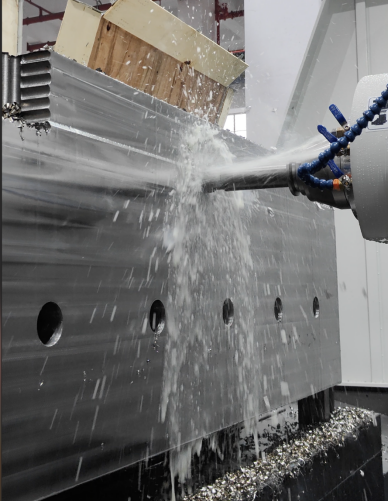
Around-the-Clock Production
At 6 p.m., Old Li pulls the main lighting switch beside the power cabinet, and more than half of the 300-plus-square-meter workshop drops into darkness. Yet the three-color tower lamp on the large horizontal machine at the back of the building still shows green.
Next to it runs a 15 meter rail loaded with 16 heavy steel pallets full of cast-iron workpieces. Before leaving for the day, Old Li has spent more than 2 hours fastening 128 unfinished pump bodies onto them using an electric wrench preset to 120 N·m.
The display screen shows a countdown clearly: estimated machining time, 14 hours and 20 minutes. Old Li takes off his oily work clothes, washes his hands with soap at the sink, locks the rolling shutter, and goes home to sleep with confidence.
Even with no one at all in the workshop, the machine can still run continuously around the clock in the dark. A traditional vertical machine with a downward-facing spindle simply cannot take on overnight work like this, because chips pile up in dead corners around the part and will not clear.
Within less than half an hour, those red-hot chips can wrap tightly around the carbide drill and stall a 10 kW spindle motor completely.
“Back when we ran night shifts, you’d be nodding off at midnight while still clutching a high-pressure coolant gun, terrified that if you dozed off for even a second, a fist-sized bird’s nest of chips would wrap around the toolholder and destroy an imported cutter worth RMB 3,000 on the spot.”
Today’s horizontal machines are different. The spindle projects from the side, and the inserts cut laterally. The chips cannot hang there for even a second. Gravity sends them rattling down into the wide hopper below.
Beneath that hopper lie two heavy augers like the shafts of an industrial grinder, turning slowly at 15 rpm. They never stop pushing tons of chips into a large steel scrap bin sitting 2 meters away.
The 2 kW coolant pump beside the machine is just as busy, spraying high-pressure coolant onto the tool tip continuously. The water flushes the parts clean so thoroughly that not even a sesame-seed-sized particle remains inside hundreds of threaded holes.
With no one standing by, the machine can still run the spindle at 15,000 rpm and tackle heavy cutting. What happens at 2 a.m. when a tool becomes worn? Hidden inside the machine is a massive circular magazine.
That magazine can store 300 tools. Before leaving work, Old Li has already scheduled a full backup lineup in the side-panel tool list:
· Tool position No. 6 holds an 8 mm carbide drill, and the system limits it to 300 deep holes
· At adjacent position No. 7, an identical new drill is already waiting as a replacement
· A small device beside the spindle projects a red laser beam
· Before every tool change, if the drill tip fails to interrupt the beam, the machine knows the tool has broken
The moment Tool No. 6 reaches its life limit, or the laser detects that the tip has chipped by even a fraction of a millimeter, the heavy robot arm removes the worn tool in 1.5 seconds. It immediately loads Tool No. 7 and resumes cutting.
All of this happens while Old Li sleeps five kilometers away in the employee dormitory, completely unaware. The temperature drops sharply at night, and by 3 a.m. the workshop is cold enough to make the gatekeeper shiver.
Metal expands and contracts dramatically with temperature. If a 10 meter machine frame cools by 5°C, dimensional error from one end to the other can reach 0.05 mm. Yet an aerospace aluminum housing may allow only 0.01 mm of tolerance.
Even a slight drift can ruin material worth hundreds of thousands of yuan in the middle of the night. The machine’s 15 ton resin-sand cast iron bed acts like the wall of a bunker, so environmental temperature changes affect it only very slowly.
“A machine’s obedience shows up in the first cut of the morning. On a machine running with temperature-controlled oil, the bore diameter measured at 8 a.m. is almost identical to the one cut at 2 a.m. when checked on a CMM.”
The heat generated by a spindle running above 10,000 rpm is severe. Behind the machine sits a dedicated chiller more than 1 meter tall, continuously supplying temperature-controlled oil to the spindle and ballscrews. Whether it is snowing or sweltering outside, the oil temperature stays fixed at 22.5°C.
At 7:30 the next morning, Old Li walks into the workshop holding two youtiao. All 16 heavy pallets on the rail have already rotated quietly back into position.
The rusty raw castings have been transformed into 128 bright finished hydraulic parts that still feel slightly warm to the touch. At the discharge end of the chip conveyor, the expelled metal swarf has piled up into a mound nearly 1.5 meters high.
That pile must weigh at least half a ton. Old Li dusts off his hands, presses the yellow tool-release button, picks up the forklift key, and starts unloading the finished parts for packing.