

Key Takeaways
- The Challenge: Mold steels (P20, H13) have high hardness, causing frequent tap breakage and misalignment.
- The Solution: Adjust RPM based on hardness (e.g., 50-70 RPM for H13) and use slightly larger pilot holes to reduce torque.
- Lubrication: Use oil-based fluids for stainless steel (1.2083) to prevent adhesion.
- Automation: Rigid horizontal machining centers (like the WJ-800) prevent vibration-induced errors through stable, one-setup processing.
1. What is Mold Steel Tapping and Why is it Critical?
In mold manufacturing, tapping is often undervalued, yet it is critical. It involves using a threaded tool (a tap) to cut internal threads into pre-drilled holes in mold bases or cores.
Unlike standard structural steel, these threads act as the "connection buckles" for the entire mold assembly. If the tapping is substandard—resulting in skewed threads or stripped patterns—the bolts will not tighten precisely. This leads to mold misalignment, coolant leakage, or even mold separation under high injection pressure.

2. Why Is Tapping Mold Steel So Difficult?
Many machinists find that taps snap easily when working with mold materials. This is primarily due to three factors:
- High Hardness & Toughness: Common mold steels like P20 (28-36 HRC) and H13 (50-55 HRC) are significantly harder than carbon steel. The cutting resistance is immense.
- Strict Coaxiality Requirements: Threads must be perfectly aligned with the hole center. Manual tapping often applies uneven force, leading to slanted threads that make assembly impossible.
- The "Work Hardening" Effect: Materials like stainless mold steel (1.2083) can harden if the tool rubs without cutting, destroying the tap's cutting edge instantly.
3. Efficient Tips: How to Reduce Breakage and Boost Precision
To solve the "broken tap" nightmare, you must move beyond guesswork. Here are the precise adjustments needed for mold steel:
A. Control Your Parameters (Speed & Feed)
Do not use standard steel speeds. As hardness increases, RPM must decrease.
- For P20 (Pre-hardened): For an M8 thread, aim for 80-100 RPM.
- For H13 (Hardened): Drop the speed to 50-70 RPM to reduce heat and torque.
B. The "Pilot Hole" Trick
For hard materials, the standard drill chart is often too tight, causing the tap to seize. Slightly enlarging the pilot hole reduces tap load without sacrificing thread strength.
| Thread Size | Standard Steel Drill (mm) | H13 / Hard Mold Steel Drill (mm) | Why? |
| M6 | 5.0 | 5.1 | Reduces torque by ~20% |
| M8 | 6.8 | 6.9 | Prevents jamming |
| M10 | 8.5 | 8.6 | Better chip evacuation |
C. Strategic Cooling
Friction generates heat, which causes "galling" (metal sticking to the tap).
- Standard Steels: Extreme-pressure emulsion is usually sufficient.
Stainless (1.2083) / High Hardness: Use oil-based cutting fluids or tapping oil. The higher lubricity prevents the chips from welding to the cutter.
4. Automating the Process: The ASIATOOLS WJ-800 Advantage
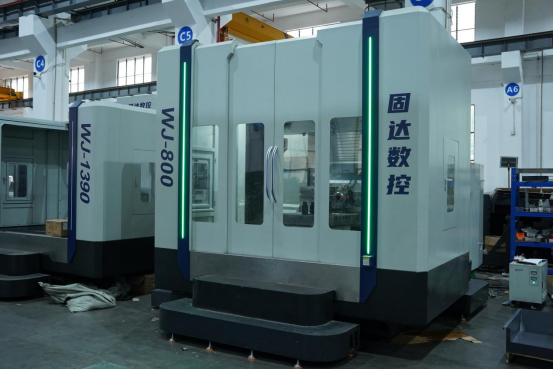
Manual tapping or using low-rigidity drill presses often leads to human error. For batch mold production or complex multi-angle molds, using a dedicated CNC solution is the game-changer.
The ASIATOOLS WJ-800 Horizontal Machining Center is specifically engineered to solve the rigidity issues found in vertical machines.
- Rigid Tapping Stability: The WJ-800 features a high-rigidity hydraulic gantry structure. Unlike lighter machines that vibrate during the "stop-reverse" tapping cycle (causing thread damage), the WJ-800 remains stable, ensuring Class-A thread quality even in H13 steel.
- One-Setup Efficiency (4-Sided Machining): Complex molds often require tapping on multiple sides. The WJ-800’s rotary B-axis table allows you to drill and tap on 4 sides in a single clamping.
The Benefit: You don't have to manually unclamp and rotate the heavy mold base. This eliminates re-positioning errors and saves hours of setup time.
- Intelligent Parameter Library: For operators unsure about the correct speeds, the system can assist in matching torque curves to material hardness, drastically reducing the learning curve and the risk of scrapped parts.
Summary
Tapping mold steel requires a shift in mindset: slower speeds, specific lubrication, and slightly larger pilot holes. However, to truly scale production and ensure zero defects, upgrading to rigid, automated equipment like the ASIATOOLS WJ-800 transforms tapping from a risky bottleneck into a reliable, automated process.